At a Glance
Expiratory pressure relief (EPR) is a CPAP feature that briefly lowers air pressure when you breathe out, making it easier to exhale against the airflow. This setting can improve comfort and help some people adjust to CPAP therapy without reducing the pressure needed to keep the airway open while inhaling.
Even though CPAP is the gold-standard treatment for obstructive sleep apnea (OSA), some CPAP users struggle with the sensation of exhaling into an incoming stream of air. To help with this, many CPAP machines have a feature called expiratory pressure relief (EPR), which enables a slight reduction in the pressure during exhalation and can help make CPAP therapy more comfortable.
Below, we’ll cover the key information about EPR, including what it is, how it works, and who is most likely to benefit from using it.
Need a CPAP Prescription? Start Here.

our partner at sleepdoctor.com
10% off Home Sleep Tests
Buy Now“Truly grateful for this home sleep test. Fair pricing and improved my sleep!”
Dawn G. – Verified Tester

Simple and convenient
- Equipment delivered to your doorstep
- One overnight test in the comfort of your own bed

Uncover sleep apnea
- Quietly collects data while you sleep
- 98% effective in detecting sleep apnea

Affordable & ships fast
- Arrives in 2-4 business days
- In-lab sleep tests cost ~$3,000+ (this one’s $189), HSA/FSA eligible


What EPR Means on a CPAP Machine
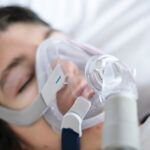
Expiratory pressure relief (EPR) on a CPAP machine is a feature that allows for a small reduction in air pressure when breathing out. Sometimes known simply as “pressure relief,” EPR is designed to make CPAP therapy more comfortable for people who dislike the feeling of exhaling against the flow of pressurized air.
Strictly speaking, fixed-pressure CPAP therapy maintains a continuous level of pressure throughout the night. However, many people find it hard to tolerate a fixed pressure level, which is why most modern devices offer options for variable pressure, such as EPR.
As the table below shows, brands use different names to describe expiratory pressure relief. There’s also variability in how EPR works, such as how it calculates the timing of breaths. Although there are subtle differences, there’s no evidence that any specific type of expiratory pressure relief works better than another.
| Brand | EPR Terminology |
|---|---|
| ResMed | Expiratory Pressure Relief (EPR), Easy Breathe technology |
| ResVent | Intelligent Pressure Release (IPR) |
| Transcend | AirRelief (EZEX) |
| Luna/React Health/BMC | Reslex |
| Philips Respironics | A-Flex, C-Flex |
| Fisher & Paykel | Expiratory relief |
How EPR Works
CPAP air pressure is measured in centimeters of water (cm H2O), and most devices can deliver pressure between 4 and 20 cm H2O. A doctor or sleep technician determines the pressure settings needed to prevent breathing disruptions.
When using EPR, the incoming air pressure briefly drops each time you exhale. This decrease may occur only at the start of exhalation, or it may stay lower for the entire breath until you inhale again.
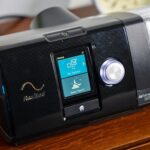
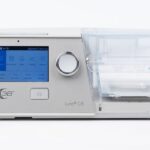
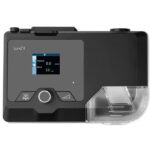
EPR is configured using the device’s digital display. For most CPAP machines, you can set the EPR from 0 to 3 with 0 being off and 3 being the maximum pressure reduction. These numbers do not always equate to pressure as measured in cm H2O.
The exact amount of pressure reduction per EPR setting varies by device. However, for all manufacturers, pressure cannot drop below 4 cm H2O, as this minimum pressure is needed to prevent breathing lapses and eliminate exhaled carbon dioxide from the CPAP mask.
Many devices also allow you to enable EPR only during the “ramp” period, which is the first 30 to 45 minutes after turning on the CPAP machine. The ramp setting gradually builds up the CPAP pressure, making it easier to fall asleep.
Who Might Benefit From EPR
For some, breathing out against the incoming pressurized air is uncomfortable and may affect their ability to consistently use a CPAP machine. Expiratory pressure relief primarily benefits people who have a hard time exhaling when using a CPAP machine.
EPR may be particularly helpful for new CPAP users because addressing discomfort early can make it easier to keep using a CPAP machine over time. It can take time to get used to the experience of using a CPAP machine during sleep, and pressure relief may improve comfort during this acclimation period.
Reduced pressure during exhalation might also be beneficial for those who require high levels of pressure to treat sleep apnea. Higher pressure can feel harder to exhale against, and EPR may reduce discomfort from the flow of highly pressurized air.


EPR vs. BiPAP
A bilevel positive airway pressure (BiPAP) device is engineered to provide two distinct air pressure levels: one for inhalation and another for exhalation. This is a clear contrast from a CPAP machine, which has a continuous and steady air pressure level.
In some ways, a CPAP device with EPR is similar to a BiPAP machine because the pressure is lower during exhalation. However, there are key differences.
- Wider pressure differential: At most, EPR can only lower expiratory pressure by about 3 cm H2O. A BiPAP machine allows a much wider range of pressure differential, from 4 cm H2O to 10 cm H2O or more.
- Breathing support: BiPAP devices can deliver a “backup breath” to people who have conditions that affect their breathing rate. This type of breathing support can be programmed into the BiPAP’s settings or can be enabled when the device detects that a person isn’t inhaling properly.
Because of these differences, BiPAP machines are typically prescribed for more complex situations, such as sleep apnea combined with another health condition that affects breathing. For example, a BiPAP machine may be recommended for people with OSA and spinal conditions, neuromuscular disease, and other medical problems that cause hypoventilation.
For people who have OSA without other conditions, BiPAP therapy is usually only prescribed if initial treatment with a CPAP machine was unsuccessful or caused side effects that prevented a person from using the device.
How to Adjust EPR Settings on a CPAP Machine
EPR on CPAP machines is usually configured on a scale of 0 (Off) to 3. The higher the setting, the more the pressure drops when you exhale.
The default setting varies by device or may be configured by your doctor or a sleep specialist. The EPR level can be changed by navigating to the EPR settings using the CPAP device’s digital display.
Although you can adjust these settings yourself, experts and CPAP device manufacturers typically recommend consulting your doctor before making changes. Reducing the pressure too much can make treatment for sleep apnea less effective. Working with your healthcare team ensures that you get the greatest benefits of CPAP therapy while minimizing discomfort and other side effects.

Written by
Eric Suni, Contributing WriterEric Suni is a health and science writer who covers sleep apnea, CPAP therapy, and sleep health for SleepApnea.org. He has more than a decade of experience translating complex medical research into clear, accessible information that helps readers better understand their health and treatment options.

Reviewed by
Dustin Cotliar, MD, MPH, Medical ReviewerDr. Dustin Cotliar is a board-certified emergency medicine physician with more than eight years of clinical experience across emergency departments and urgent care settings. He earned his medical degree from the State University of New York (SUNY) Downstate College of Medicine and a Master of Public Health from Columbia University.