At a Glance
The oxygen desaturation index (ODI) is the average number of times per hour of sleep that your blood oxygen level drops by a set amount, commonly 3% or 4%. It's recorded during a sleep study or overnight oximetry and helps doctors put the apnea-hypopnea index (AHI) in context and helps diagnose sleep apnea. A higher ODI generally signals more frequent drops in oxygen, but your provider reads it together with other measures, not on its own.
If you’ve had a sleep study, your results may have included an oxygen desaturation index, or ODI, showing how often your oxygen level dropped while you slept. This measurement can help doctors understand how frequently your breathing disruptions are affecting blood oxygen and may provide additional context when evaluating conditions like obstructive sleep apnea (OSA).
Below, we'll explain what the oxygen desaturation index is, how it's calculated, how to interpret your score, and how it fits into a sleep apnea diagnosis.
Is It Sleep Apnea? Find Out for as Low as $0
Some breathing issues are connected to sleep apnea. Sleep Doctor’s home sleep study helps you get clear answers and may be covered by your insurance.
What Is the Oxygen Desaturation Index?
The oxygen desaturation index is the average number of times your blood oxygen levels dip per hour of sleep. Specifically, it's a drop in your blood oxygen saturation (SpO2) of at least 3% from your baseline, though some labs use a 4% threshold, lasting at least 10 seconds.
What Causes Oxygen Desaturation During Sleep?
Oxygen levels drop when your breathing is reduced or paused. For example, in OSA, the upper airway narrows or collapses, briefly cutting off airflow. Less air moving in means less oxygen reaching your blood, so your SpO2 falls until your breathing resumes and oxygen levels are restored.
These repeated dips are more than a number on a report. Intermittent drops in oxygen (known as hypoxia) and the associated bursts of cortisol that rouse someone to restore normal breathing are thought to drive many of the health consequences linked to sleep apnea, including high blood pressure, cardiovascular disease, insulin resistance, and problems with memory and concentration.
Several conditions and factors can contribute to low oxygen during sleep:
- Obstructive sleep apnea: The upper airway narrows or collapses, interrupting airflow
- Central sleep apnea (CSA): The brain briefly fails to signal the respiratory muscles to breathe
- Chronic lung disease like COPD: Can lower baseline oxygen levels
- Heart failure: Can affect breathing patterns and oxygenation overnight
- High altitude: Lower oxygen levels in the air can reduce blood oxygen during sleep, especially at higher elevations
How Is the Oxygen Desaturation Index Calculated?
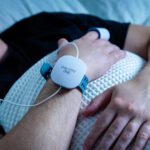
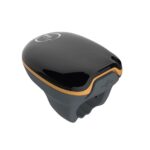
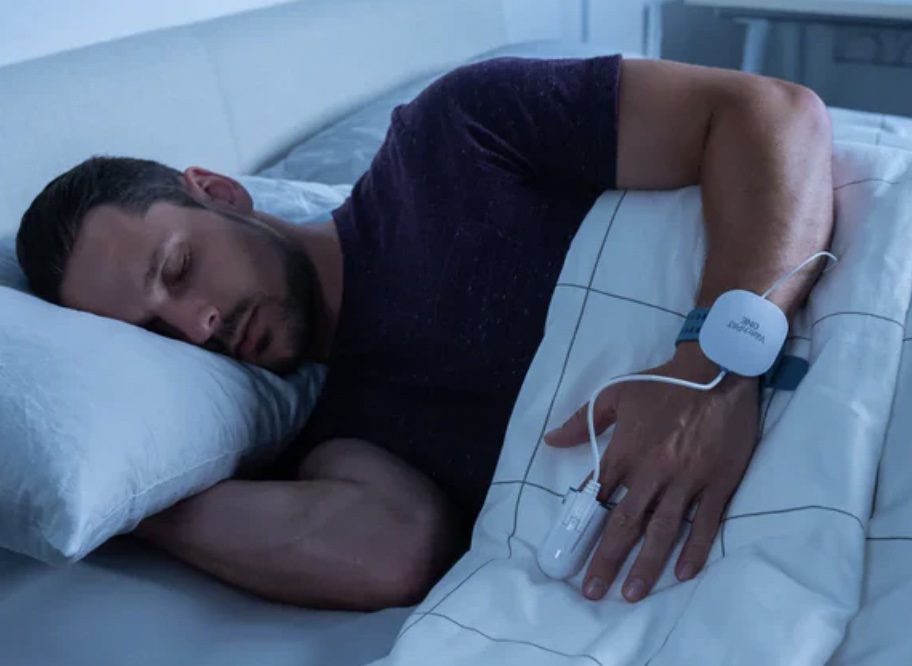
ODI is measured with a pulse oximeter, often a small sensor clipped to your fingertip, that tracks your SpO2 throughout the night. The device, or a trained scorer, counts every qualifying desaturation event and divides that by the length of the recording. The result is your events-per-hour score.
This measurement can be captured in a few different settings:
- In-lab polysomnography (PSG): Overnight sleep study in a sleep clinic with multiple sensors
- A home sleep apnea test: A simpler kit you use in your own bed, which may or may not detect measure of sleep
- Standalone overnight oximetry: Device that records only your blood oxygen levels and doesn’t detect sleep
It’s important to note, though, that the desaturation threshold changes the number. A 3% drop (common in American Academy of Sleep Medicine scoring) produces a higher ODI than a 4% drop (used in some settings and by Medicare). The exact same night of sleep can yield two different ODI values depending on which rule the lab applies, and many may report both measures.
Oxygen Desaturation Index Score Interpretation
ODI scores are often grouped using the same bands as the apnea-hypopnea index (AHI), which makes comparison easier. As a general framework:
- Under 5 events per hour: Generally considered normal
- 5 to 14.9 events per hour: May indicate mild sleep apnea
- 15 to 29.9 events per hour: May indicate moderate sleep apnea
- 30 or more events per hour: May indicate severe sleep apnea
Normal Oxygen Desaturation Index
A normal oxygen desaturation index is typically fewer than 5 events per hour. Keep in mind that labs and thresholds vary, so these ranges are best read as context rather than hard lines.
Research offers additional guideposts. A systematic review suggested clinicians consider diagnosing adult OSA at a 4% ODI of 15 or more events per hour, with further evaluation warranted at a 4% ODI of 10 or more, though the authors noted significant variation across the studies they reviewed.


Oxygen Desaturation Index and Sleep Apnea Diagnosis
ODI can provide useful information when evaluating someone for obstructive sleep apnea, but it isn’t used by itself to make a diagnosis. Sleep apnea is typically diagnosed with a sleep study that measures breathing disruptions throughout the night, most commonly using the apnea-hypopnea index (AHI) or respiratory disturbance index (RDI).
ODI adds another layer of information by showing how often blood oxygen drops during sleep. Because obstructive apneas and hypopneas can temporarily reduce airflow, people with sleep apnea often experience repeated oxygen desaturations, and higher ODI values may correspond with more frequent or severe breathing disruptions. This may more closely correlate to the long-term risk for hypertension, diabetes, and cardiovascular disease.
However, ODI and AHI don’t always match exactly. Some breathing events cause an arousal without a large oxygen drop, while oxygen levels can also fall for reasons unrelated to sleep apnea. For that reason, doctors interpret ODI alongside breathing events, oxygen saturation levels, symptoms, and other sleep study data, rather than relying on the number alone.
When to Talk to a Doctor
An abnormal ODI may be a reason to get evaluated, not a diagnosis by itself. Consider talking to a doctor if your score is abnormal or if you notice symptoms of sleep apnea, such as:
- Loud, chronic snoring
- Gasping, snorting, or choking while asleep
- Witnessed pauses in breathing during sleep
- Excessive daytime sleepiness or fatigue
- Morning headaches
- Waking up feeling unrefreshed
- Dry mouth
- Teeth grinding (bruxism)
- Frequent nighttime urination (nocturia)
- Night sweats
A provider can put your number in context. They can order a full sleep study, interpret your ODI alongside other measures and your symptoms, and determine what's actually causing your oxygen to drop. Acting on the number alone isn't the goal; understanding the cause is.
Frequently Asked Questions
In a clinical setting, supplemental oxygen raises SpO2 quickly. For sleep-related drops, though, the aim is to treat the cause: CPAP therapy keeps the airway open so oxygen stays stable. Sleeping on your side and avoiding alcohol or sedatives before bed can also help. But make sure to talk to your doctor about your specific concerns.
Severity is usually banded the same way for AHI and mirrored by ODI. Under 5 events per hour is generally normal, 5 to 14.9 is mild, 15 to 29.9 is moderate, and 30 or more is severe. These ranges give context, but your provider interprets them alongside your symptoms and other data from your sleep study.
The most common causes are obstructive and central sleep apnea, obesity, chronic lung disease such as COPD, and heart failure. It's also worth knowing that other factors, including skin color, site of measurement, and anemia, can affect how accurately a pulse oximeter reads your oxygen.
Medical Disclaimer: This content is for informational purposes only and isn't a substitute for professional medical advice. Consult your healthcare provider with questions about any symptoms you're experiencing or before changing or stopping an existing treatment.

Written by
Logan Foley, Contributing WriterLogan Foley is a Certified Sleep Science Coach and Executive Product Director with years of experience researching sleep health and evaluating sleep products. She holds a bachelor’s degree in business from Boise State University and an MBA in marketing from Washington State University. Her experience with insomnia has also shaped her interest in sleep disorders and evidence-based approaches to improving sleep.

Reviewed by
Brandon R. Peters, MD, FAASM, Medical ReviewerDr. Brandon R. Peters is a board-certified neurologist and sleep medicine physician who specializes in diagnosing and treating sleep disorders, including insomnia, obstructive sleep apnea, circadian rhythm disorders, and narcolepsy. He is a Fellow of the American Academy of Sleep Medicine and currently practices at Virginia Mason Franciscan Health in Seattle.