Look & Feel
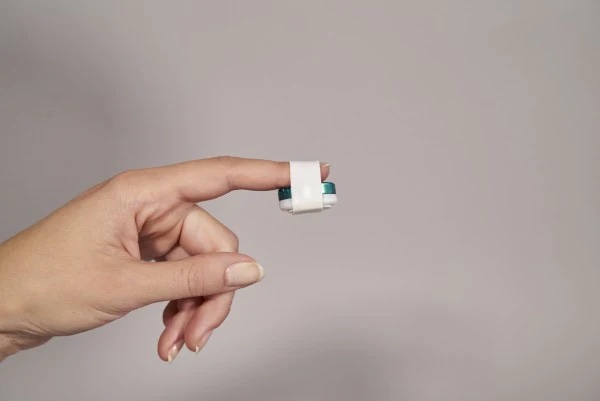
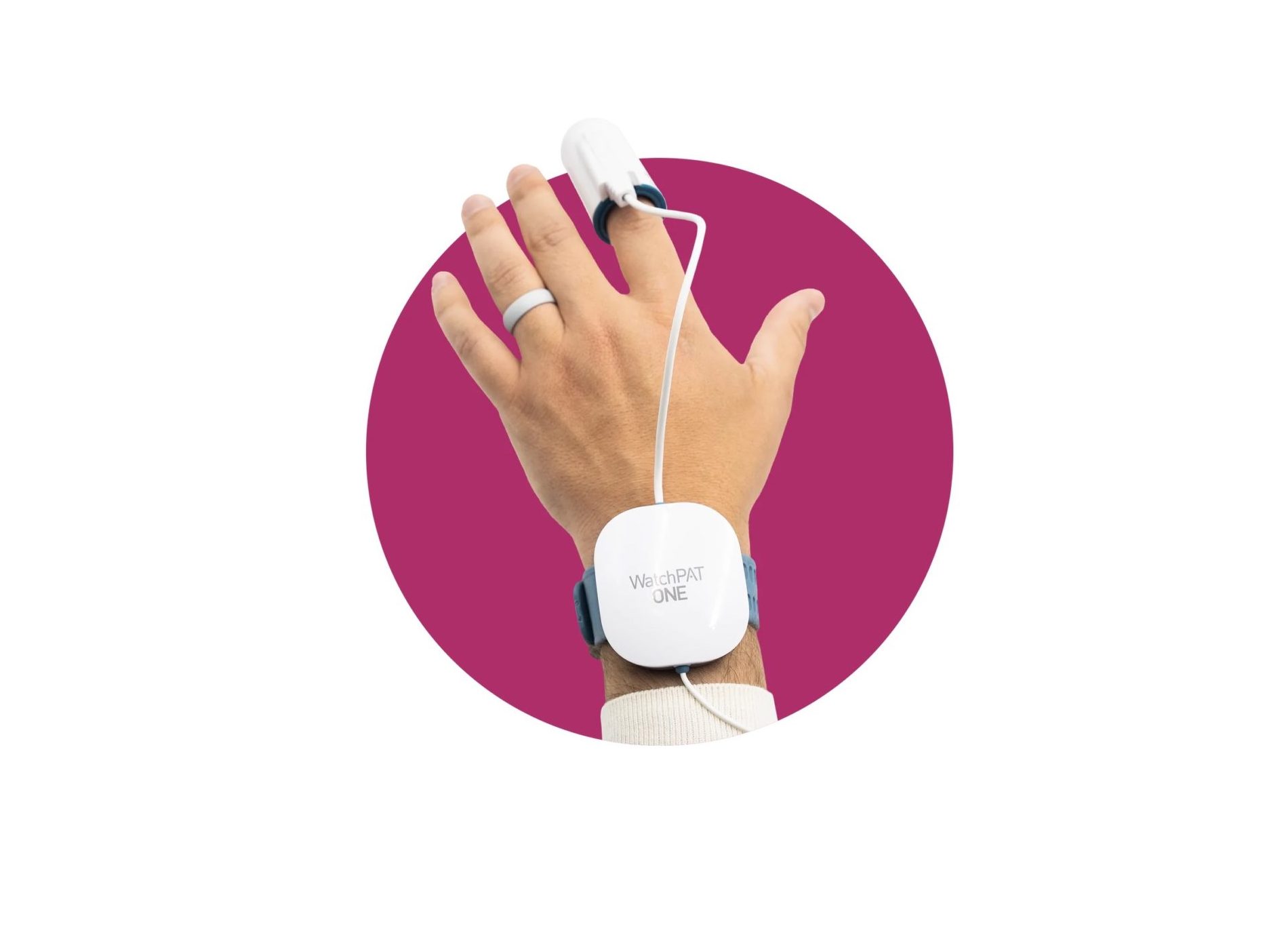
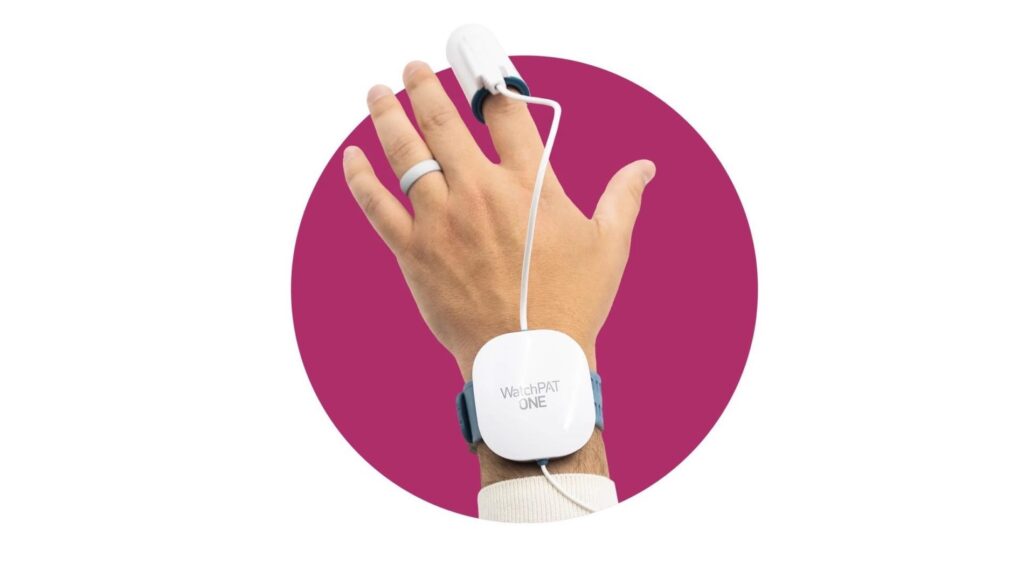
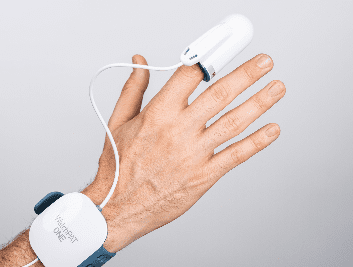
The WatchPAT One is a compact, wearable device made up of two lightweight sensors connected by coated wires to a central unit worn on the wrist, similar to a watch. One sensor is placed on the fingertip to measure blood oxygen and heart rate, while the other adheres to the upper chest to monitor breathing patterns and sleep position.
Ideal For
- Adults at least 18 years old who have symptoms of moderate to severe sleep apnea
- People who are reluctant to participate in an in-lab sleep study
- Those who find a traditional sleep study too expensive
Who should keep looking
- Anyone with a history of cardiovascular disease, stroke, or hypoventilation
- People who need to be assessed for sleep disorders beyond sleep apnea or insomnia
- People without access to a smartphone
-
Price
$189
-
Test Location
Wrist, finger, and chest
Diagnosing sleep apnea usually requires an overnight sleep study in a sleep lab. However, an at-home test like the Sleep Doctor WatchPAT ONE can be a more convenient and less expensive diagnosis tool for some people. It uses three sensors to monitor and record seven metrics that doctors use to diagnose sleep apnea.
Below, we’ll explain how the WatchPAT ONE works, how it differs from traditional sleep studies and other at-home sleep apnea tests, and essential information you should have when deciding whether this test is right for you.
Use this link for the most current discount on Sleep Doctor's Home Sleep Test
Shop NowSymptoms of Sleep Apnea
Sleep apnea is a sleep breathing disorder characterized by frequent periods when the sleeper’s airway is blocked, leading to a pause (or apnea) in their breathing. Many people with sleep apnea don't realize they have the condition. That's partly because some symptoms of OSA occur during sleep, while others occur during waking hours. It may be worth speaking to your doctor about OSA if you experience symptoms of sleep apnea:
- Excessive daytime sleepiness
- Dry mouth
- Morning headaches
- Inability to concentrate
- Sexual dysfunction
- Frequent nighttime awakenings
- Increased nighttime urination
- Loud snoring that may sound like choking or gasping
In addition, some common risk factors for OSA are alcoholism, being over 35 years old, and having a higher body mass index.
Think You May Have Sleep Apnea? Try an At-Home Test
our partner at sleepdoctor.com
Save 10% + FREE 2-Day Shipping
Add to Cart“Truly grateful for this home sleep test. Fair pricing and improved my sleep!”
Dawn G. – Verified Tester

Simple and convenient
- Equipment delivered to your doorstep
- One overnight test in the comfort of your own bed

Uncover sleep apnea
- Quietly collects data while you sleep
- 98% effective in detecting sleep apnea

Affordable & ships fast
- Arrives in 2-4 business days
- In-lab sleep tests cost ~$3,000+ (this one’s $189), HSA/FSA eligible


How the WatchPAT ONE Works
The Sleep Doctor WatchPAT ONE uses three sensors — a wrist sensor, a pulse oximeter worn on the finger, and a chest sensor — to collect data on seven bodily metrics.
The data is sent via Bluetooth to an app on your smartphone, which transmits it to the cloud to allow your doctor to review these metrics for diagnosis. The information is also collected in a personalized sleep report.
What It Measures
The device monitors the following metrics:
- Heart rate: A person’s heart rate slows during an apnea event, then increases after they begin breathing again.
- Blood oxygen level: Apnea events cause lower blood oxygen levels, which usually reach their lowest point as the sleeper begins to breathe again.
- Peripheral arterial tone (pulse volume changes): Changes in the volume of your pulse, also known as peripheral arterial tone, have been shown to correlate with OSA.
- Amount of snoring: How much a person snores may indicate the presence of OSA, in addition to helping determine its severity.
- Actigraphy (body movement): By monitoring body movement, actigraphy allows doctors to determine when the person being tested is asleep or awake.
- Chest movement: While people with OSA will attempt to inhale during an apnea event, people with CSA do not show this effort. Monitoring chest movement can help determine whether a person is experiencing OSA or CSA.
- Body positioning: A person’s sleeping position can sometimes directly influence the number of apnea events they experience.
Types of Sleep Apnea Detected
The WatchPAT ONE is designed to detect both obstructive sleep apnea and central sleep apnea.
- Obstructive sleep apnea (OSA) is a common sleep-related breathing disorder that can cause periods of reduced airflow or pauses in breathing.
- Central sleep apnea (CSA) is a less common disorder with similar symptoms that’s caused by the brain briefly failing to send signals to the muscles that control breathing.
Results also references the apnea-hypopnea index (AHI) to help diagnose OSA and determine its severity. A person’s AHI is the number of episodes of shallow or halted breathing they experience divided by the number of hours they slept.
| OSA Severity | AHI Score |
|---|---|
| Mild OSA | 5-15 |
| Moderate OSA | 15-30 |
| Severe OSA | 30 or higher |
Accuracy of Diagnosing Sleep Apnea
At-home tests like the WatchPAT ONE can be an effective screening method for moderate to severe OSA and CSA. It's 98% accurate in determining what type of sleep apnea you might have when compared to an in-lab sleep study.
However, those experiencing milder symptoms may have better luck pinpointing their condition with an in-lab test. If the results of the WatchPAT ONE are inconclusive or indicate possible symptoms of another sleep disorder, your doctor may recommend a follow-up sleep study at a sleep clinic.
How to Use the WatchPAT ONE
In addition to the testing night itself, using the Sleep Doctor WatchPAT ONE requires several steps before and after the test. It's crucial to watch and read all documentation provided with the WatchPAT ONE. User error can affect accuracy and may result in a follow-up sleep study being required.
- Complete medical assessment: After ordering the test, you will receive an email with directions and medical assessment forms. You should complete these forms as soon as possible to avoid potential delays.
- Book your telehealth appointment: Following the receipt of your assessment forms, you can book a video chat appointment with a licensed sleep doctor. The doctor will determine whether you are a candidate for testing using the WatchPAT ONE.
- Read instructions: Setting up your WatchPAT ONE for a sleep test is a straightforward process, but familiarizing yourself with the instructions will help ensure accuracy. Since movement can knock the chest sensor out of place during sleep, many people find it helpful to secure the sensor with medical tape.
- Set up the device: About 15 minutes before bedtime, wrap the main sensor comfortably around your wrist using the adjustable strap, just like a watch. Place the fingertip probe on your index finger and secure the chest sensor with the adhesive patch. Make sure the sensors are snug but not tight, then get into bed as you normally would and start the test using the app or instructions provided.
- Sleep while your data is recorded: The WatchPAT ONE automatically relays data to your assigned doctor. One night of testing is sufficient for most people, although user error or a sleep period lasting less than two hours may require retesting.
- Receive your results: After your test, you will receive your results, including an AHI score, via email. You will also be invited to make a second appointment with your assigned sleep doctor.
- Review your results via telehealth appointment: Your second appointment will include a discussion of your results and the opportunity to ask any remaining questions you might have. Your doctor will determine whether your results indicate a sleep apnea diagnosis and walk you through the next steps, including treatment options.
WatchPAT ONE vs. In-Lab Sleep Studies
Most cases of sleep apnea are diagnosed using a sleep study (polysomnography) conducted at a sleep clinic. Some sleepers may be able to replace an in-lab sleep study with the WatchPAT ONE or a similar at-home testing device. However, it’s important to note that there are benefits and drawbacks to both types of testing.
Some people are better suited to an in-lab sleep study due to their health or the possible presence of other sleep disorders. However, people who are otherwise good candidates for the WatchPAT ONE may choose one type of testing over the other based on reasons like cost, convenience, or accuracy.
| WatchPAT ONE | In-Lab Sleep Study | |
|---|---|---|
| Benefits | -Significantly lower cost, some of which may be covered by medical insurance. -At-home testing may make it easier to sleep normally during the test. -More convenient, particularly for people in rural or isolated areas | -The gold standard in terms of accuracy. -Able to detect the presence of sleep disorders beyond sleep apnea. -Provides observation for people with a history of cardiovascular disease, stroke, or other conditions |
| Limitations | -Less accurate than an in-lab study even when used properly. -User error may cause the test to be less accurate than advertised. -Inconclusive results may require an in-lab sleep study, negating the cost-effectiveness | -Cost can be prohibitive, particularly for people who do not have medical insurance coverage. -People in rural or isolated areas may have to travel, adding to the cost. -Some people find it difficult to sleep during the study |
What You Need to Know About the WatchPAT ONE
At-home sleep apnea tests like the Sleep Doctor WatchPAT ONE use sensors to track bodily metrics that your doctor then uses for a diagnosis.
Unlike some other at-home tests, the WatchPAT ONE tracks seven distinct metrics rather than relying on airflow alone. The test gathers data using a wrist sensor, a pulse oximeter worn on the fingertip, and a chest sensor.
What Comes With It
The WatchPAT ONE consists of a watch-like wristband that also houses the wrist sensor, as well as a pulse oximeter and a chest sensor. The pulse oximeter and chest sensor are connected to the wristband with coated wires.
Your product code provides access to the companion smartphone app, which controls the device, sends data to your doctor, and gives you access to your personalized sleep report.
While the WatchPAT ONE contains everything necessary to complete your test, medical tape may be useful for securing the chest sensor and ensuring it does not detach during sleep.
Components:
- Wristband with sensor
- Pulse oximeter
- Chest sensor
- Companion smartphone app
Technical Specifications
The WatchPAT ONE is named after its most notable feature, which is the use of proprietary peripheral arterial tone (PAT) technology to help diagnose sleep apnea. In addition to PAT, which tracks changes in pulse volume, the WatchPAT ONE measures six other bodily metrics.
One night of use should provide your doctor with the information needed to make a diagnosis, though a sleep period of less than two hours may require a second night of testing.
| Price: $189 |
|---|
| Features: –Lightweight and noninvasive design -Three sensors track seven bodily metrics -Uses proprietary PAT technology for increased diagnosis accuracy -Companion smartphone app provides access to the data collected and transmits it to your doctor -Disposable design does not need to be returned to a clinic |
Potential Side Effects
Most people find the WatchPAT One easy to use and well-tolerated, but some may experience mild side effects while using the device.
- Skin irritation: Adhesive patches used for the chest or fingertip sensors may cause temporary redness or irritation in people with sensitive skin.
- Discomfort: Wearing sensors on the wrist, chest, and finger can feel unfamiliar at first, but most people adjust quickly once they’re in bed.
- Sleep disruption: While the WatchPAT One is designed to be as noninvasive as possible, the sensation of wearing equipment may affect sleep in some users.
- Stress or anxiety: Some people may feel self-conscious or anxious about testing their sleep at home, but knowing the device is clinician-approved and designed for comfort can help ease concerns.
These effects are generally mild and short-lived. If you experience persistent discomfort or skin issues, contact your healthcare provider or the Sleep Doctor support team for guidance.
Warranty and Shipping Policies
| Availability | The WatchPAT ONE is available in a number of regions, including the U.S., Japan, and some European countries. U.S. customers can purchase the test through SleepDoctor.com, sleep specialist retailers, and third-party retailers such as Amazon. |
| Shipping | Shipping costs and times vary depending on which retailer you choose. Sleep Doctor provides free standard shipping on orders over $50. |
| Returns | Unopened tests purchased from Sleep Doctor can be returned within 60 days for a full refund, not including expedited shipping costs. Customers are responsible for the cost of return shipping. |
| Warranty | The WatchPAT ONE has a 12-month warranty covering material or workmanship defects. Depending on the issue, the device may be replaced or returned to the supplier for repair. Warranty claims should be made as soon as the defect becomes apparent. |
Customer Reviews for WatchPAT ONE
The Sleep Doctor WatchPAT ONE has generally received very positive reviews from customers. The device’s ease of use, cost-effectiveness, and rapid results are singled out by many reviewers as reasons why they are happy with their purchase.
Most complaints from customers center around technical issues with the companion app, as well as delays in shipping or results. However, responses recorded by the Better Business Bureau show that the company offers timely solutions for these complaints.
The majority of reviewers report that their test seemed highly accurate, though some report the opposite. While careful setup of the device can aid in accuracy, some people will require a follow-up in-lab sleep study if their results are inconclusive.
Frequently Asked Questions
Once you complete the test, your data is automatically uploaded through the WatchPAT app and sent securely to a board-certified sleep physician for review. You’ll receive your results and medical interpretation directly from your provider. During a follow-up telehealth appointment, you can also discuss a treatment plan if sleep apnea or another sleep disorder is detected.
You can use your phone during the setup process, but once the test begins, it’s best to keep your phone nearby and still to ensure a stable connection. Avoid using your phone during the test, as movement or notifications may interfere with the device’s readings.
No. The WatchPAT ONE is a single-use, disposable device designed for one night of testing. This eliminates the need to return equipment and ensures that each user receives fresh, hygienic sensors and components.
WatchPAT ONE is FDA-cleared and clinically validated, with 98% accuracy compared to in-lab sleep studies for detecting obstructive sleep apnea. Its proprietary Peripheral Arterial Tone (PAT) technology has been shown in clinical studies to reliably measure sleep stages, breathing events, oxygen levels, and heart rate.
Depending on the severity of your symptoms, your doctor may also recommend a titration study, in which you try CPAP therapy in a lab setting to determine the appropriate fixed air pressure level. Once the right pressure setting is determined, you're given a prescription to purchase a CPAP machine.
Alternatively, the doctor may recommend automatic positive airway pressure (APAP) therapy and prescribe a pressure range. APAP machines automatically adjust pressure within the prescribed range based on your breathing patterns while you sleep.
Medical Disclaimer: This content is for informational purposes and does not constitute medical advice. Please consult a health care provider prior to starting a new treatment or making changes to your treatment plan.

Still have questions?
Sleep apnea products can be confusing. If you need individualized assistance, post your question to the Sleep Doctor forum.

Written by
Tochukwu Ikpeze, MD, Contributing WriterTochukwu grew up in New York and has a passion for creative and scientific writing. Tochukwu holds an undergraduate degree in Biology and Psychology, a Master’s degree in Biomedical Science, and a Medical Degree as well. In his free time, Tochukwu enjoys reading, learning, exploring various topics pertaining to the human condition and conveying that information to the public through writing.

Reviewed by
Abhinav Singh, MD, MPH, FAASM, Medical ReviewerDr. Singh is the Medical Director of the Indiana Sleep Center. His research and clinical practice focuses on the entire myriad of sleep disorders.