At a Glance
While snoring is typically considered one of the hallmark sleep apnea symptoms, it’s possible to have sleep apnea without snoring. This is especially true for women, people with central sleep apnea, and those who have previously had surgery to the upper airway. If you’re experiencing unrefreshing sleep or other sleep apnea symptoms, it’s a good idea to ask your doctor for a sleep test.
Snoring is the easiest sleep apnea symptom to identify, but it’s not the only one. Research suggests that approximately 60% to 95% of people with obstructive sleep apnea snore. This means that at least some people who have sleep apnea don’t snore.
If it’s not treated, sleep apnea affects day-to-day life and contributes to serious health problems. Understanding what else to look for can help you catch sleep apnea you might have missed, so you can get the treatment you need.
Think You Might Have Sleep Apnea? Get Answers at Home
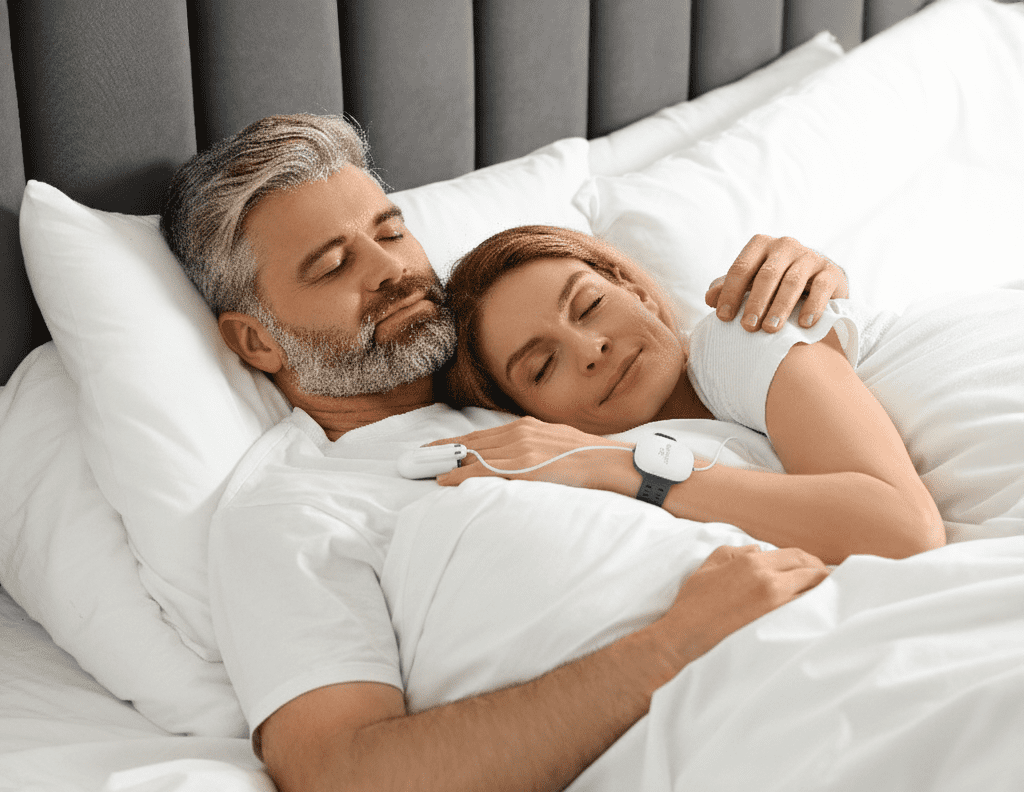
Sleep Doctor’s home sleep study makes diagnosis simple — no lab visit required. Get results reviewed by a sleep specialist and guidance on what to do next.
Why Sleep Apnea Doesn’t Always Cause Snoring
Although snoring and obstructive sleep apnea (OSA) stem from a similar cause, they’re not exactly the same. Snoring refers to the sound that arises from the vibration of soft tissues — typically the soft palate, uvula, and base of the tongue — in the airway during sleep. By contrast, sleep apnea refers to brief periods of stopped or reduced breathing.
In OSA, these pauses in breathing are caused by physical blockage in the upper airway as the muscles relax, which is similar to what triggers snoring. However, not all pauses in breathing cause snoring. Snoring is generally louder when the sleeper is making an effort to breathe against an obstruction, so it may increase with moderate blockage but disappear when the airway becomes completely blocked.
This makes it difficult to say if severe snoring is a sign of severe OSA. Some researchers suggest that bouts of intense snoring, rather than overall average snoring throughout the night, might correlate better with severe OSA. Changes in air pressure as the airway opens and closes may also cause explosive snoring. Along the same lines, some people snore but don’t have sleep apnea.
There’s also another type of sleep apnea, central sleep apnea (CSA), that occurs not with an airway obstruction but when the brain has trouble communicating the need to breathe to respiratory muscles. As a result, central sleep apnea is rarely associated with snoring.
Types of Sleep Apnea Without Snoring
Any type of sleep apnea can be present without snoring, although obstructive sleep apnea is most likely to involve snoring.
- Obstructive sleep apnea: Since OSA and snoring are both caused by a narrowed airway during sleep, OSA is often — but not always — accompanied by snoring.
- Central sleep apnea: People with CSA don’t usually snore, but it’s possible.
- Treatment-emergent central sleep apnea: People with treatment-emergent central sleep apnea, previously called complex sleep apnea, experience obstructive sleep apnea at baseline and develop central-like lapses in breathing with treatment. These sleepers may more likely experience snoring related to the obstructive events.
Symptoms of Sleep Apnea Without Snoring
Snoring is just one of the many symptoms of sleep apnea. Even if you don’t snore, you may have sleep apnea if you often experience one or more of the following symptoms:
- Excessive daytime sleepiness or fatigue
- Waking up gasping or choking
- Dry mouth or sore throat
- Morning headaches
- Difficulty concentrating or remembering things
- Insomnia or restless sleep
- Mood changes (irritability, anxiety, or depression)
- High blood pressure
- Nocturia (frequent urination at night)
- Bruxism (grinding or clenching teeth)
- Nocturnal heartburn or reflux
- Nocturnal palpitations
- Night sweats
- Erectile dysfunction
Your bed partner may also notice pauses in your breathing, though it’s also possible to have OSA with no noticeable symptoms.
Who Is at Risk of Sleep Apnea Without Snoring
Experts don’t fully understand why some people with sleep apnea snore and some don’t. Many researchers have tried to develop technology to help people predict whether they have OSA based on their snoring patterns, but nobody has been successful yet.
Part of the problem is that there are a lot of factors to consider: Snoring can be measured by volume (intensity) or frequency, and it can change from night to night and even between sleep positions, sleep stage, and with the part of the airway that’s narrowed.
However, experts have noticed that certain people may be more likely to have sleep apnea without snoring.
- Women: Rather than snoring, women and those assigned female at birth are generally more likely to experience sleep apnea symptoms such as insomnia, anxiety, depression, bruxism, morning headaches, night sweats, or restless sleep.
- People with very severe OSA: Some research has found that in certain people with severe OSA, the absence of airflow or the complete blockage of the airway makes them snore less, instead of more.
- Those who have previously had surgery: People who have had upper airway surgery often stop snoring, as the tissues that were vibrating have been removed, but may continue to have OSA.
- People with CSA: Since central sleep apnea isn’t caused by a physical blockage, it’s not usually associated with snoring. In fact, someone with central sleep apnea is usually less likely to snore, since they’re not actively trying to pull in air. People with heart failure, kidney failure, narcotic use, and certain neurological conditions more typically experience CSA rather than OSA, so they’re more likely to have sleep apnea without snoring.
General risk factors such as older age, menopause, obesity, family history, and anatomical features like large tonsils also raise the risk of OSA, whether with or without snoring.
If you sleep alone or if your bed partner isn’t sensitive to noise, keep in mind that you might be snoring and simply not realize it. For example, research suggests men and women are equally as likely to snore, but women are less likely to report it. To help, you may want to look into snore-tracking apps like Snore Lab.
How Sleep Apnea Is Diagnosed
Sleep apnea is diagnosed with a sleep study, which measures your breathing patterns and other metrics while you sleep. Sleep studies are usually done in a sleep lab, but if your doctor suspects you have moderate to severe OSA with no other disorders, you may be able to do an at-home sleep study instead.
Based on the data collected, doctors will make their diagnosis, primarily based on your apnea-hypopnea index (AHI), which is a calculation of how many breathing disruptions you experience per hour of sleep.
- Mild sleep apnea: AHI of 5 to 15
- Moderate sleep apnea: AHI of 15 to 30
- Severe sleep apnea: AHI of more than 30
Sleep Apnea Treatment Options
Treating sleep apnea involves controlling certain lifestyle factors, treating underlying disorders, and using a dedicated sleep apnea treatment method such as continuous positive airway pressure (CPAP) therapy.
- Lifestyle changes: Many people find their sleep apnea symptoms lessen after cutting out alcohol or sedative medications, implementing a regular exercise plan, and losing weight. For those with obesity, tirzepatide (Zepbound) was FDA-approved as first medication treatment of OSA. It may also help to avoid back sleeping, as sleep apnea is often worse in this position. In some people, treatment of nasal allergies may be helpful.
- Continuous positive airway pressure (CPAP) therapy: CPAP therapy blows a steady stream of air into the nose or nose and mouth to keep the airway open during sleep. CPAP therapy works very well and is considered a first-line treatment for sleep apnea, but many people stop using it because they find it uncomfortable. Finding a comfortable mask and the optimal pressure can help make CPAP therapy more comfortable. Your doctor may also prescribe bilevel therapy (BiPAP), which may make it easier to exhale against pressure.
- Oral appliances: Oral appliances come in the form of mouthguards that pull forward your lower jaw and tongue or just your tongue, helping keep the airway open. These devices work well for mild to moderate OSA.
- Surgery: Surgery may be appropriate for people whose sleep apnea is caused by a physical anomaly, such as large tonsils, a deviated nasal septum, or nasal polyps. However, sometimes surgery eliminates snoring without eliminating sleep apnea, so it’s a good idea to ask for a follow-up sleep study two to three months afterward.
- Upper airway stimulation: Upper airway stimulation uses an implanted device to target the hypoglossal nerve, which controls the tongue. By moving the tongue forward, it helps open up the airway. Upper airway stimulation works well for certain people with moderate to severe OSA.
- Control of underlying disorders: Since central sleep apnea is usually caused by an underlying disorder such as heart failure, doctors will usually start by treating the primary disorder.
After starting sleep apnea treatment, snoring and symptoms of sleep apnea may improve at different rates.
When to Talk to a Doctor
Schedule an appointment with your doctor if you’re getting unrefreshing sleep or experiencing other symptoms of sleep apnea, such as morning headaches, mood swings, or noticeable pauses in breathing. Since sleep apnea doesn’t always go hand-in-hand with snoring, the only way to know for sure if you have this disorder is to do a professional sleep test.
Medical Disclaimer: This content is for informational purposes only and isn't a substitute for professional medical advice. Consult your healthcare provider with questions about any symptoms you're experiencing or before changing or stopping an existing treatment.

Written by
Danielle Pacheco, Contributing WriterDanielle is originally from Vancouver, BC, where she has spent many hours staring at her ceiling trying to fall asleep. She channels her frustration into researching sleep solutions and sharing insights with fellow insomniacs. Danielle spends her downtime trying out new recipes and working off the calories on the soccer field. Danielle studied the science of sleep with a degree in psychology at the University of British Columbia.

Reviewed by
Brandon R. Peters, MD, FAASM, Medical ReviewerDr. Brandon R. Peters is a board-certified neurologist and sleep medicine physician who specializes in diagnosing and treating sleep disorders, including insomnia, obstructive sleep apnea, circadian rhythm disorders, and narcolepsy. He is a Fellow of the American Academy of Sleep Medicine and currently practices at Virginia Mason Franciscan Health in Seattle.