At a Glance
The best sleeping positions to stop snoring are on your side or on your back with your head elevated. If neither of these sleep positions helps and you have other symptoms of sleep apnea like pauses in breathing during sleep, morning headaches, or daytime tiredness, it may be time to see a doctor for evaluation.
Even though snoring is common, it can still be disruptive. If your snoring is loud or frequent enough, it may wake both you and your bed partner up multiple times throughout the night. In some cases, simply changing sleep positions can reduce or eliminate snoring. But in other cases, snoring can be a sign of sleep apnea. Read on to learn about sleeping positions to stop snoring and when you should talk to a doctor.
Snoring or Sleep Apnea? Test for as Low as $0
Sleep Doctor’s home sleep study provides answers — no lab visit required. Most major insurance plans accepted.

Sleeping Positions to Help Stop Snoring
The position you sleep in can have a significant impact on snoring. Certain sleeping positions make it more likely that the muscles and soft tissues in the throat will relax and narrow the airway, increasing the vibrations that cause snoring. Although changing your sleep position isn't a cure for everyone, it may reduce snoring for people whose symptoms are affected by gravity and airway alignment.
Side Sleeping
Research has found that sleeping on your side can greatly reduce snoring compared to sleeping flat on your back. Sleeping on your side helps keep the airway more open than sleeping on your back because gravity is less likely to cause the airway to collapse. Specifically, the tongue and soft tissues in the throat are less likely to be pulled back toward the airway when side sleeping.
Back Sleeping With Head of the Bed Elevated
Studies show that when a person switches from sleeping flat on their back to sleeping on their back with the head of the bed elevated, they snore less, wake up less often during the night, and spend more time in deep sleep.
Ideally, you should use a wedge pillow or elevate the entire head of the bed between 7.5 and 20 degrees. Avoid using extra pillows to elevate just the head, as this can worsen snoring and cause neck pain. Elevating the head of the bed also often helps with acid reflux, which may make it a good option for people who both snore and have gastroesophageal reflux disease (GERD).
Worst Sleeping Positions for Snoring
Some sleeping positions are more likely than others to contribute to snoring by allowing the tongue and soft tissues in the throat to fall backward and partially block the airway. For many people, these positions increase airway resistance and make the vibrations of the soft tissue around the airway that cause snoring more pronounced.
Flat on Your Back
Experts advise against sleeping flat on your back if you’re concerned about snoring. When back sleeping, gravity can pull soft tissues in the mouth and throat downward, closing the upper airway. When these tissues vibrate and rub together as you breathe, snoring occurs.
One study found that nearly 66% of sleepers who snore but don’t have sleep apnea are more likely to snore while back sleeping. The same study found that being overweight or having obesity also makes snoring while back sleeping more likely.
Stomach Sleeping
The connection between snoring and stomach sleeping hasn't been studied as much as the connection between snoring and other sleep positions. This may be because sleeping on one's stomach is the least common sleep position among adults.
However, one study found that people snore more while back or stomach sleeping, compared to side sleeping. Also, people who experience low back pain may be advised to avoid this position, as it’s linked to increased pain.

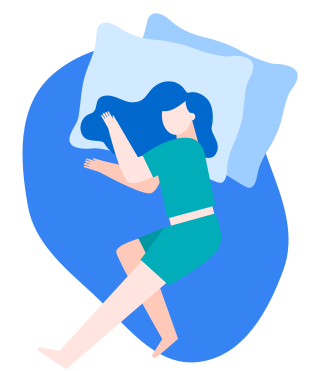
How to Sleep on Your Side
The sleep position you default to can be a deeply ingrained habit that’s hard to change. For this reason, you might want to enlist helpful tools if you decide to train yourself to sleep on your side instead of your back or stomach.
- Positional therapy: Positional therapy describes any tool that helps a person maintain or avoid a certain sleep position throughout the night. An “old school” approach to positional therapy involves sewing a tennis ball to the back of a person's pajamas, which makes rolling onto one's back difficult. Newer forms of positional therapy are smaller and higher tech. Positioned on the back or chest, they may beep or buzz when a sleeper rolls onto their back.
- Body pillows: Research suggests that sleeping with a body pillow may encourage sleepers to remain in the side sleeping position for a longer period of time. A body pillow is longer than a regular bed pillow, and sleepers often hug a body pillow and drape a leg over it when in the side sleeping position.
- Anti-snoring pillows or pillow inserts: Some anti-snoring pillows are strategically shaped to keep sleepers in a side sleeping position, where they’re less likely to snore. Others are smart devices that “listen” and recognize when a sleeper is snoring, then begin gently inflating in response. Studies show this inflation encourages the sleeper to move their head position, which reduces snoring.
How to Elevate Your Head While Sleeping
- Adjustable bed base: You can elevate the head of a bed by purchasing an adjustable bed base and mattress, then using the electric controls to raise the head of the bed.
- Bed risers: Low-cost bed risers can also be purchased and placed beneath the corners of the head of the bed.
- Wedge pillows: Wedge pillows intended to elevate the head may help, though they may not be as effective as elevating the whole head of the bed.
Other Ways to Reduce Snoring
Changing your sleep position is just one of many ways you can potentially reduce snoring. Consider also trying these other tips:
- Avoid or cut back on alcohol, especially near bedtime. Alcohol relaxes the muscles that help keep the airway open, making the airway more likely to narrow or collapse and worsening snoring.
- Reduce nasal congestion by treating allergies or infections, or using nasal spray. Better nasal breathing may encourage the tongue and jaw to rest in a position that helps keep the airway at the back of the throat more open.
- Consider making lifestyle changes to lose weight, if you are overweight or have obesity.
- You may want to try over-the-counter nasal strips to open your nasal passages.
- Look into a tongue-retaining device, which can reduce snoring by pulling the tongue forward during sleep.
- Talk to your doctor about potentially going off of or reducing sedative medications in the hours before sleep.
When to Talk to a Doctor
Talk to a doctor if your snoring isn't reduced after changing your sleep position and trying other tips for snoring. Although not everyone who snores has sleep apnea, snoring is often the most prominent symptom of the disorder.
If you snore and have other signs of sleep apnea, talking to your doctor is important. Common symptoms of sleep apnea include daytime tiredness, unrefreshing sleep, trouble focusing, morning headaches, and memory problems. Sleep apnea is more common among people who are overweight or have obesity, but anyone can develop the disorder. Sometimes, the bed partner of a person with sleep apnea sees them stop breathing during sleep or wake up gasping for air.
Seeing a doctor for persistent snoring can be a good idea, even if you don't have sleep apnea. Sometimes the cause of snoring is a different underlying issue that can be treated, like nasal polyps, allergies, or swollen tonsils and adenoids.
Frequently Asked Questions
People are much more likely to snore when back sleeping, because gravity can pull the tongue and soft tissues down toward the throat, which may cause the airway to collapse. The sound of snoring is caused by this blockage in the airway and the tissues vibrating and rubbing against each other.
Multiple studies have found that sleeping with your head elevated can reduce snoring. It's best to elevate your head by either raising the head of the bed or using a wedge pillow. Propping yourself up using regular pillows might not be enough to help reduce snoring, and it may even cause over-flexing of neck worsen snoring.
People can snore in any sleep position, but studies have found that people tend to snore less when side sleeping compared to flat back sleeping. When side sleeping, gravity doesn't pull soft tissues toward the airway like it does when back sleeping, so the airway has more space and tissues are less likely to touch each other and cause the sound of snoring.
Medical Disclaimer: This content is for informational purposes only and isn't a substitute for professional medical advice. Consult your healthcare provider with questions about any symptoms you're experiencing or before changing or stopping an existing treatment.

Written by
Jay Summer, NBC-HWC, Contributing WriterJay Vera Summer is a writer, editor, and wellness coach. She holds a Bachelor's of Science in psychology and Master's degrees in both writing and public policy. As a wellness coach, she's certified by the Mayo Clinic and the National Board for Health and Wellness Coaching (NBHWC). She's been writing about sleep and other health topics for six years. Previously, she taught undergraduate writing courses for five years at the University of South Florida.

Reviewed by
Pranshu Adavadkar, MD, Medical ReviewerDr. Pranshu Adavadkar is a board-certified sleep medicine physician and pediatrician with more than two decades of clinical experience diagnosing and treating sleep disorders in both children and adults. His clinical work focuses on conditions such as obstructive sleep apnea, insomnia, and other sleep-related breathing disorders.