At a Glance
Tongue-retaining devices (TRDs) are oral appliances designed to treat snoring and obstructive sleep apnea by holding the tongue forward to keep the airway open during sleep. They’re an alternative to CPAP and may be helpful for people who cannot tolerate other treatments. Proper fit and guidance from a healthcare provider can help improve effectiveness and comfort.
For people who snore or have mild to moderate obstructive sleep apnea (OSA), tongue-retaining devices (TRDs) offer a non-invasive way to keep the airway open during sleep. Although CPAP is the most common and effective treatment for OSA, some people find it difficult to tolerate. TRDs may be a suitable CPAP alternative, particularly for those seeking a portable, easy-to-use device.
In this article, we’ll explain more about what a tongue-retaining device is, how it works, who might want to consider a TRD, and how it compares to a mandibular advancement device (MAD).
What Is a Tongue-Retaining Device?
A tongue-retaining device (TRD) is an oral appliance used to treat snoring and obstructive sleep apnea by holding the tongue forward during sleep. Most TRDs are made of clear silicone, but some are transparent and tinted with a color.
TRDs differ from mandibular advancement devices (MADs), another type of oral appliance used to treat sleep apnea. Instead of pulling the tongue forward, like TRDs, MADs push the lower jaw forward. Tongue-retaining devices are often used when a person cannot use a MAD.
A Simpler Way to Treat Sleep Apnea
Sleep Doctor’s oral appliances provide an alternative treatment designed for comfort, portability, and ease of use.
How Do Tongue-Retaining Devices Work?
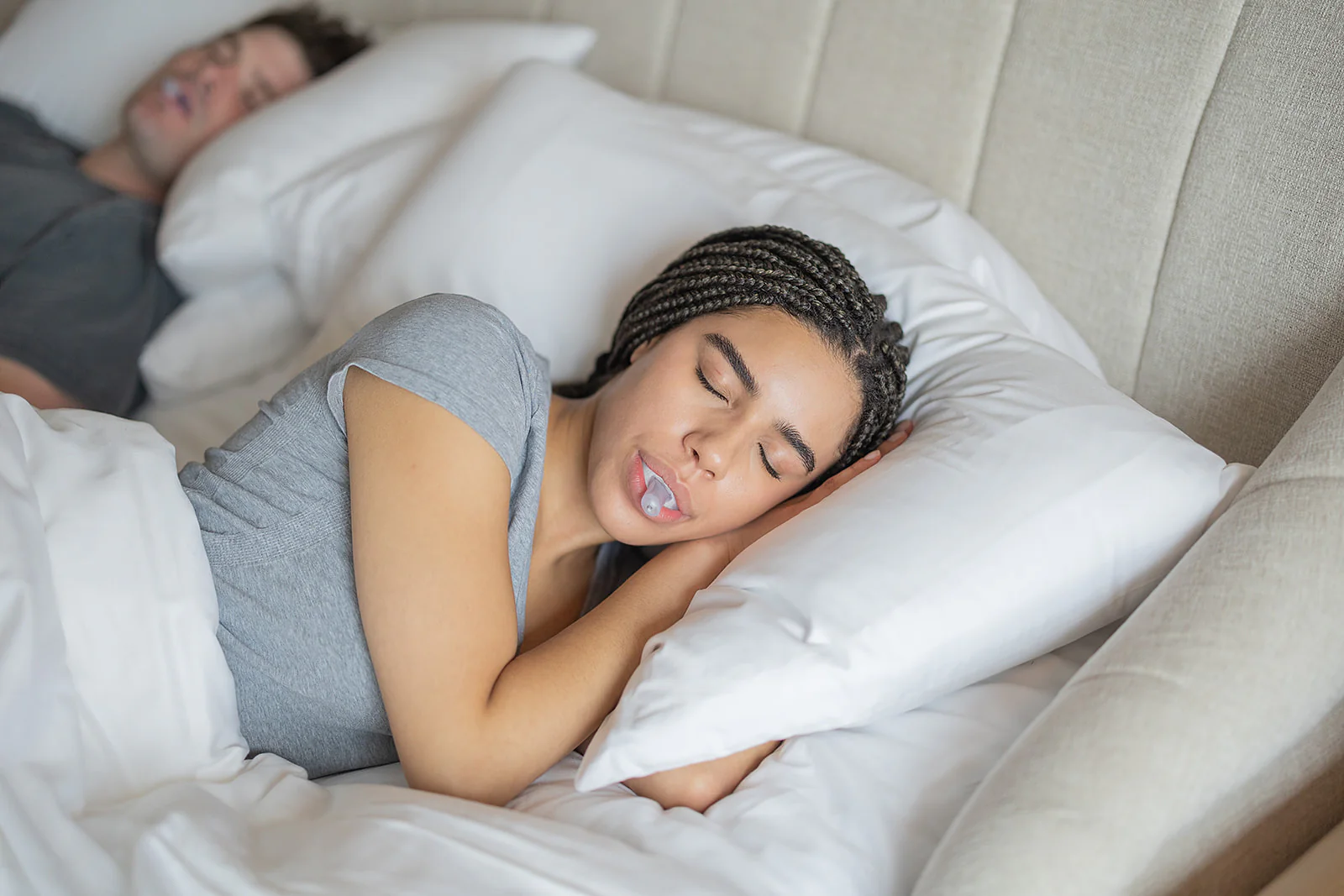
A tongue-retaining device fits over the teeth similar to a mouth guard, except it has a cavity or bulb attached to the front that sticks out of the mouth. When a person puts on the TRD and inserts their tongue into the cavity, suction keeps the tongue pulled forward throughout the night as they sleep. Holding the tongue in this forward position opens up space in the mouth and throat, which can keep the airway from collapsing as frequently during sleep.
Who Should Consider a Tongue-Retaining Device?
A tongue-retaining device may work best for certain people, including:
- People with mild to moderate obstructive sleep apnea
- Sleepers who cannot tolerate using a CPAP machine
- Those who snore and whose snoring may bother a bed partner
- People who cannot use MADs, because they wear dentures, have incompatible jaw positioning, or experience jaw pain
- Sleepers who prefer using a small, more portable alternative to CPAP therapy
Who Should Not Use a Tongue-Retaining Device?
Tongue-retaining devices aren't a good fit for everyone. TRDs may not work well for the following groups:
- Those with nasal obstructions who cannot breathe easily through the nose
- People who have severe gum disease (periodontal disease)
- Individuals who cannot stick their tongues out very far, perhaps due to a short lingual frenulum, the tissue that anchors the tongue in the lower jaw
- Anyone who experiences long-term discomfort or chronic pain while using a TRD
- People who wear dentures or are missing teeth (applicable only with certain models)
- Those with central sleep apnea (CSA)
Tongue-Retaining Device vs. Mandibular Advancement Device
When a person decides that CPAP therapy isn't their ideal sleep apnea treatment, exploring oral appliances is a common next step. Comparing tongue-retaining devices (TRDs) with mandibular advancement devices (MADs) can help clarify which might be a better fit.
| Tongue-Retaining Device | Mandibular Advancement Device | |
|---|---|---|
| How It Works | Pulls the tongue forward using suction | Fits over the teeth and pushes the lower jaw forward |
| How It Feels | Feels like a soft but bulky device that pulls the tongue forward, which may feel awkward or uncomfortable at first | Feels like a sports mouthguard, and the pressure it puts on the teeth and jaw may be noticeable at first |
| Best For | Sleepers with mild to moderate obstructive sleep apnea who cannot tolerate CPAP and people who want to stop snoring | Sleepers with mild to moderate obstructive sleep apnea who cannot tolerate CPAP and have healthy teeth |
| Who Shouldn't Use | Those with severe nasal obstruction, severe gum disease, or ongoing discomfort while using a TRD | People who don't have enough teeth to support the device and those with severe jaw pain or TMJ |
| Side Effects | Short-term side effects include discomfort, pain, drooling, and dry mouth; long-term side effects may include minor tooth movement | Short-term side effects include jaw pain, dry mouth, drooling, irritated gums, and teeth grinding; long-term side effects may include bite changes, tooth loosening, and TMJ problems |
| Price | Between $500 and $3,000 when custom-fitted by a dentist or doctor; less than $100 for non-custom devices | Between $1,500 and $4,500 when custom-fitted by a dentist or doctor; less than $100 for non-custom devices |
Neither type of oral appliance should be used by people with central sleep apnea; braces; certain dental conditions like loose teeth, untreated gum disease, severe jaw pain, or temporomandibular joint (TMJ) disorders; severe low oxygen levels during sleep; an immediate need for obstructive sleep apnea therapy; or an inability to remove the device from the mouth.

Benefits of Tongue-Retaining Devices
Effectively managing obstructive sleep apnea with any treatment type is thought to provide many benefits. Researchers haven't yet studied the long-term benefits of using a tongue-retaining device specifically, but studies of other treatment types suggest that effectively managing the disorder can reduce daytime tiredness, lower the risk of car crashes, lower high blood pressure, reduce erectile dysfunction, and improve overall quality of life.
Drawbacks and Side Effects of TRDs
The biggest drawback of tongue-retaining devices is that not everyone can use them. For example, experts suggest that people with nasal obstruction that interferes with mouth breathing and those with severe gum disease do not use the devices. In some people, pain or other side effects may persist over time and make the device a poor choice for long-term treatment.
However, for most people, most side effects associated with tongue-retaining devices subside over time. Common side effects include:
- Discomfort
- Pain
- Drooling or excessive saliva production
- Dry mouth
How to Use a Tongue-Retaining Device
To use a custom tongue-retaining device, you must first see a dentist, get impressions taken of your mouth, and have a device fitted for you. Once the device has been manufactured and you've received it, follow these steps to use it:
- Brush and floss your teeth. This step is key to keeping your device sanitary and avoiding bacteria growth while you wear it.
- Wet the device. Briefly run water over the device. When it's moist, it will create a better suction against your mouth.
- Hold the device opening against your lips. Getting the device in position prepares you to create the suction.
- Stick your tongue into the device, then squeeze. Once your tongue is in the device cavity, squeeze it lightly between your thumb and finger to push out any additional air. This will create the suction.
- Adjust if necessary. Reflect on how comfortable and secure the device feels. At this point, your tongue should be in the device cavity and the outer “wings” or flanges should be between your teeth and lips. If anything feels off, redo steps 3 and 4.
- Clean the device the next morning. When you wake up, rinse the device with warm water. Then, lightly brush it with a soft-bristled brush and mild soap. Do not brush it with toothpaste, which can cause damage.
In addition to gently cleaning your tongue-retaining device every morning, letting it soak in denture cleaner or retainer cleaner at least once a week is a good idea.
When to Talk to a Doctor
See a doctor if you have symptoms of sleep apnea, such as loud snoring, gasping during sleep, falling asleep or feeling excessively tired during the day, irritability, forgetfulness, and headaches. If you've already been diagnosed with obstructive sleep apnea, see your doctor if you're having issues with your treatment method and want to explore other options.
Frequently Asked Questions
Tongue-retaining devices haven't been studied as much as MADs, but the studies conducted on TRDs suggest that they work for a majority of people. For example, one study of 84 adults who used TRDs for over three years found that the device effectively treated sleep apnea in 71% of participants and decreased snoring in 68% of participants. People with gum disease or too many missing teeth were excluded from participating.
Tongue-retaining devices that are custom-fitted by a dentist to treat obstructive sleep apnea generally require a prescription. There are also similar, over-the-counter anti-snoring devices available, but these may not adequately treat obstructive sleep apnea. It's best to use a tongue-retaining device under the watch of your doctor.
Yes, just like other oral appliances and CPAP therapy, you'll want to use your tongue-retaining device every night to treat obstructive sleep apnea.
Most sleep specialists consider CPAP therapy the first-line and most effective treatment for obstructive sleep apnea. One very small study found that both tongue-retaining devices and CPAP machines could effectively treat obstructive sleep apnea, but CPAP therapy led to greater improvements on some measures.
Tongue-retaining devices typically need to be replaced every six to 12 months, depending on how often they’re used and how well they’re maintained. Over time, the material can wear out or lose its shape, which may reduce effectiveness and comfort. Regular cleaning and proper storage can help extend the lifespan.
Insurance coverage for tongue-retaining devices varies. Some health insurance plans may cover them if they’re prescribed to treat obstructive sleep apnea, especially when provided through a dentist or sleep specialist. However, over-the-counter devices are less likely to be covered. It’s best to check with your insurance provider to understand your specific benefits.
Medical Disclaimer: This content is for informational purposes only and isn't a substitute for professional medical advice. Consult your healthcare provider with questions about any symptoms you're experiencing or before changing or stopping an existing treatment.

Written by
Jay Summer, NBC-HWC, Contributing WriterJay Vera Summer is a writer, editor, and wellness coach. She holds a Bachelor's of Science in psychology and Master's degrees in both writing and public policy. As a wellness coach, she's certified by the Mayo Clinic and the National Board for Health and Wellness Coaching (NBHWC). She's been writing about sleep and other health topics for six years. Previously, she taught undergraduate writing courses for five years at the University of South Florida.

Reviewed by
Brandon R. Peters, MD, FAASM, Medical ReviewerDr. Brandon R. Peters is a board-certified neurologist and sleep medicine physician who specializes in diagnosing and treating sleep disorders, including insomnia, obstructive sleep apnea, circadian rhythm disorders, and narcolepsy. He is a Fellow of the American Academy of Sleep Medicine and currently practices at Virginia Mason Franciscan Health in Seattle.