At a Glance
Sleep apnea treatment focuses on keeping the airway open during sleep to prevent repeated breathing interruptions. Options range from CPAP and other positive airway pressure devices to oral appliances, surgery, nerve-stimulation implants, medications, and lifestyle changes depending on the cause and severity of the condition.
Treating sleep apnea includes a range of options designed to keep the airway open, improve sleep quality, and reduce health risks. People with sleep apnea experience recurrent episodes of complete or partial collapse of the upper airway during sleep, leading to snoring, gasping or choking, disrupted sleep, daytime sleepiness, and morning headaches. The right approach to treatment depends on the type and severity of sleep apnea, as well as your needs and preferences.
Below, we'll cover the most common treatments, including CPAP therapy, oral appliances, lifestyle changes, and surgical options, to help you understand your choices and find a solution that works for you.
Think You May Have Sleep Apnea? Try an At-Home Test

our partner at sleepdoctor.com
10% off Home Sleep Tests
Buy Now“Truly grateful for this home sleep test. Fair pricing and improved my sleep!”
Dawn G. – Verified Tester

Simple and convenient
- Equipment delivered to your doorstep
- One overnight test in the comfort of your own bed

Uncover sleep apnea
- Quietly collects data while you sleep
- 98% effective in detecting sleep apnea

Affordable & ships fast
- Arrives in 2-4 business days
- In-lab sleep tests cost ~$3,000+ (this one’s $189), HSA/FSA eligible


Positive Airway Pressure (PAP) Therapy
Positive airway pressure (PAP) therapy is the preferred method for treating sleep apnea in both adults and children. PAP devices are machines that deliver pressurized air to a person’s airway. This helps keep the upper airway open, allowing the user to breathe freely and experience fewer disruptions while sleeping.
PAP machine users sleep with a mask that covers the mouth and nose or just the nose. A hose attaches the mask to a small machine placed near the bed. This device delivers pressurized air through the hose and into the airway, which helps stabilize soft tissues that relax at sleep onset, helping prevent airway collapse during sleep.
Continuous Positive Airway Pressure (CPAP)
CPAP devices are the most basic and well-studied PAP devices. These machines provide continuous, consistent positive air pressure during use. Determining the correct pressure on the device usually requires an overnight sleep study conducted by a medical professional.
Auto-Adjusting Positive Airway Pressure (APAP)
APAP machines automatically adjust air pressure based on breathing patterns and vibrations caused by snoring. APAP may be appropriate for particular individuals with variable pressure needs.
Bilevel Positive Airway Pressure (BiPAP)
BiPAP devices provide higher air pressure when a person breathes in and lower pressure when a person breathes out. BiPAP is typically used to treat OSA in patients that don’t respond well to CPAP therapy.
Adaptive Servo-Ventilation (ASV)
This is a type of PaP machine that automatically adjusts inhalation pressure according to the needs of the sleeper. ASV devices are often used to treat individuals with both OSA and central sleep apnea (CSA), but they aren't recommended for people with certain heart-related health conditions.
Expiratory Positive Airway Pressure (EPAP)
EPAP is a CPAP alternative that doesn't involve a bedside machine. Instead, it helps keep the airway open with two small nasal plugs and generates pressure when you breathe out. This can help reduce airway collapse during sleep and may be an option for some people with mild to moderate obstructive sleep apnea (OSA).
Oral Appliances
Although PAP therapy and lifestyle changes are the first-line treatments for OSA, an oral appliance might be recommended if PAP treatment isn't working or very uncomfortable. Additionally, oral appliances may be useful during travel, since they're highly portable and don't require electricity (unlike CPAP machines).
Mandibular Advancement Devices (MADs)
MADs can effectively treat mild and moderate OSA and may improve symptoms in some patients with severe OSA. These one- or two-piece units are customized to a patient’s mouth and jaw. They work by pushing the lower jaw forward, which helps open the upper airway.
Tongue-Retaining Devices (TRDs)
TRDs may be used if MADs aren't effective. TRDs use suction to pull the tongue forward, which helps maintain an open upper airway. Although these devices are not as well studied, evidence suggests that some people who use them have about half as many breathing disruptions at night.
If your doctor thinks you will benefit from an oral device, you'll be referred to a dentist with knowledge of OSA. This specialist can customize the device and fine-tune it to meet your tolerance and needs.
Medication
In December 2024, the Food and Drug Administration approved weight loss drug Zepbound to treat moderate to severe obstructive sleep apnea in patients with obesity. The medication is the first to be specifically approved for the treatment of OSA. Zepbound works by promoting weight loss, which can reduce fat around the neck and airway and help decrease the likelihood of airway collapse during sleep.
The approval came after two clinical studies, funded by the drug’s manufacturer, Eli Lily, found that patients given tirzepatide (the active ingredient in Zepbound and Mounjaro) experienced fewer respiratory events (breathing disruptions) per hour after 52 weeks, compared to patients given a placebo.
While PAP therapy remains the gold standard of OSA treatment, the drug’s approval gives patients another option. And in some cases, patients may still continue with CPAP while they're on Zepbound.
Sleep Apnea Surgery
Similar to oral appliances, surgery for sleep apnea is usually a second-line (or even last-line) treatment option that's only recommended when a patient doesn't respond well to lifestyle changes and PAP therapy. Generally, surgery doesn’t completely resolve OSA, although it can improve symptoms for the long term.
In some cases, though, surgery may be a first-line therapy if there's a clear, surgically correctable issue. This may happen more frequently in children with sleep apnea caused by enlarged tonsils and adenoids.
There are a number of different surgeries used to address OSA. Some are intended to improve airflow by decreasing obstructions in the airway, while others are meant to increase the viability of other therapies, such as PAP.
- Uvulopalatopharyngoplasty (UPPP): This involves reshaping the soft palate to open the airway. UPPP may include removal or reduction of the uvula.
- Tonsillectomy and Adenoidectomy: These upper throat surgeries involve removal of enlarged tonsils, adenoids, or both in order to increase airflow in the throat.
- Lower throat surgeries: Surgeries for OSA that target the lower pharyngeal or throat region are also designed to remove tissues that block the airway. These often include tongue reduction surgeries.
- Global upper airway surgeries: These include surgeries that reposition the upper and lower jaw in order to remove blockages and tighten soft tissue in the throat so it does not collapse as easily.
- Nasal surgeries: Nasal surgeries usually involve changing the nasal cavity in some way so that other OSA therapies such as PAP and oral appliances work better.
- Weight-loss surgery (bariatric surgery): In people with obesity-related OSA, bariatric surgery can lead to significant weight loss, which in turn may reduce or eliminate airway obstruction caused by excess tissue and fat deposits around the neck and upper airway.
Hypoglossal Nerve Stimulation (HNS)
Hypoglossal nerve stimulation (HNS) therapy involves implanting a nerve stimulating device that helps keep the airway open. The device activates when a person is about to inhale, stimulating nerves that activate throat muscles and pushing the tongue forward, which opens the airway.
HNS is not first-line therapy for obstructive sleep apnea (OSA) and is only pursued if other primary therapies such as positive airway pressure (PAP) are not working.
Oropharyngeal Exercises
Oropharyngeal exercises, also known as myofunctional therapy, are targeted movements that strengthen the muscles of the mouth, tongue, and throat. These exercises can reduce the severity of OSA by improving muscle tone and preventing airway collapse during sleep. They're especially helpful for people with mild to moderate OSA or those looking to supplement other treatments like CPAP.
Research has shown that performing these exercises regularly — typically for 10 to 15 minutes a day — can lead to measurable improvements in symptoms, including reduced snoring, fewer breathing interruptions, and better sleep quality.
Examples of oropharyngeal exercises include:
- Tongue slide: Place the tip of your tongue against the roof of your mouth and slide it backward as far as you can without losing contact. Repeat 10 to 15 times.
- Soft palate lift: Say “ahh” with your mouth open while trying to raise your uvula (the hanging part in the back of your throat). Repeat several times.
- Cheek puffing: Close your mouth, puff out one cheek at a time, and hold the air for a few seconds. Alternate sides and repeat.
- Throat contraction: Swallow slowly and deliberately while keeping your lips sealed and your tongue pressed against the roof of your mouth.
- Tongue press: Push your entire tongue flat against the roof of your mouth and hold for a few seconds. Repeat 10 times.
While these exercises don’t replace medical treatments, they can be an effective and low-risk way to support your sleep apnea care, especially if done consistently over time.
Lifestyle Changes
If you have obstructive sleep apnea, your doctor may identify risk factors that you can address through behavior and lifestyle changes. Often, these changes are recommended in combination with PAP therapy. While modifying your behavior or lifestyle usually will not completely resolve OSA symptoms, it can lead to meaningful improvements.
- Maintain a healthy weight: Studies show that people who have a BMI over 30 see improvements in their OSA if they lose weight. Because many factors influence weight, including genetics, sustained weight loss can be challenging. However, some people are able to lose weight through diet, exercise, medication, or surgery.
- Avoid alcohol: Consuming alcohol can cause obstructive breathing events to last longer and happen more frequently. People with OSA may be advised to avoid alcohol entirely. Those who do choose to drink alcohol should avoid consuming it in the hours before bedtime.
- Avoid sedatives: Similar to alcohol, sedatives can make OSA symptoms worse. Talk to your doctor about whether any medications you’re taking could aggravate your OSA, especially any that treat depression or anxiety. If appropriate, your doctor may prescribe alternative medications.
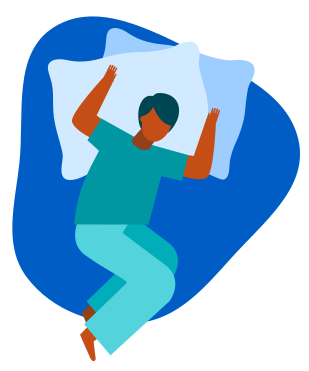
- Avoid back sleeping: Back sleeping can worsen OSA, so try to sleep on your side. If this proves difficult, your doctor might suggest wearing a device around your chest or neck that vibrates when you lie on your back.
- Exercise regularly: Some research suggests that exercise may improve OSA symptoms, even when it doesn’t lead to weight loss.
The Risks of Untreated Sleep Apnea
Obstructive sleep apnea can put a person’s health and wellbeing at risk in both the short and long term. People who experience daytime drowsiness as a result of OSA are especially vulnerable to accidents at work or on the road. Low-quality sleep also increases the likelihood that a person will develop depression or have problems with attention and memory.
Untreated sleep apnea can contribute to high blood pressure, heart conditions, and problems regulating blood sugar. For these reasons, it’s important that people with OSA find the right therapy to manage their condition.
How to Talk to Your Doctor
Talking with your doctor about sleep apnea treatment is an important step in finding a solution that works for you. Because there are several options, your doctor can help you weigh the benefits and drawbacks of each based on your diagnosis, symptoms, and personal preferences.
Before your appointment, it can help to think about your goals and any challenges you’ve experienced. For example, you might consider whether comfort, convenience, cost, or long-term effectiveness is most important to you. If you’ve already tried a treatment like CPAP, be prepared to share what worked well and what didn’t, including issues like mask discomfort, dryness, or difficulty using the device consistently.
During the conversation, ask questions about how each option works, how effective it is for your level of sleep apnea, and what kind of follow-up care may be needed. You can also discuss whether adjustments like trying a different mask, changing pressure settings, or using additional comfort features might improve your experience.
Frequently Asked Questions
Obstructive sleep apnea (OSA) typically doesn’t go away on its own, but treatment and lifestyle changes — like weight loss, exercise, or surgery — can significantly reduce or even eliminate symptoms in some people. For most, OSA is a chronic condition that requires long-term management.
Yes, many people live long, healthy lives with sleep apnea, especially when it's properly treated. Untreated sleep apnea, however, increases the risk of heart disease, stroke, diabetes, and other health issues, so consistent treatment is key to long-term health.
The timeline to reverse damage depends on the severity and how long the condition went untreated. Improvements in energy, mood, and blood pressure can occur within weeks of starting treatment, but reversing more serious effects can take months or longer and may not be fully reversible.
Avoid alcohol and sedatives before bed, as they relax the airway muscles and can worsen apnea. Also steer clear of smoking, untreated allergies, and poor sleep habits, all of which can contribute to inflammation or airway obstruction.
Medical Disclaimer: This content is for informational purposes and does not constitute medical advice. Please consult a health care provider prior to starting a new treatment or making changes to your treatment plan.

Written by
Tochukwu Ikpeze, MD, Emergency Medicine PhysicianTochukwu grew up in New York and has a passion for creative and scientific writing. Tochukwu holds an undergraduate degree in Biology and Psychology, a Master’s degree in Biomedical Science, and a Medical Degree as well. In his free time, Tochukwu enjoys reading, learning, exploring various topics pertaining to the human condition and conveying that information to the public through writing.
Reviewed by
Gerard J. Meskill, MD, FAASM, Board-Certified Sleep Medicine PhysicianDr. Gerard J. Meskill is a neurologist and sleep medicine physician specializing in the diagnosis and treatment of sleep disorders, including narcolepsy, obstructive sleep apnea, and insomnia. He is board-certified in both neurology and sleep medicine and has extensive experience helping patients manage complex sleep conditions and disorders of excessive daytime sleepiness.