At a Glance
Acupuncture is sometimes used as a complementary therapy for sleep apnea, with limited studies suggesting it may help reduce symptoms such as snoring or breathing disruptions. However, research is still preliminary, and acupuncture is generally considered an adjunct therapy rather than a replacement for established treatments like CPAP.
Acupuncture, an ancient practice from traditional Chinese medicine, is being explored in Western medicine as a potential therapy for conditions like obstructive sleep apnea (OSA), a common sleep disorder in which a person’s airway repeatedly becomes blocked during sleep, leading to frequent pauses in breathing.
While more research is needed, acupuncture shows some promise as an OSA therapy when used in combination with conventional medical treatments or when those therapies prove ineffective or difficult to tolerate.
Think You May Have Sleep Apnea? Try an At-Home Test

our partner at sleepdoctor.com
10% off Home Sleep Tests
Buy Now“Truly grateful for this home sleep test. Fair pricing and improved my sleep!”
Dawn G. – Verified Tester

Simple and convenient
- Equipment delivered to your doorstep
- One overnight test in the comfort of your own bed

Uncover sleep apnea
- Quietly collects data while you sleep
- 98% effective in detecting sleep apnea

Affordable & ships fast
- Arrives in 2-4 business days
- In-lab sleep tests cost ~$3,000+ (this one’s $189), HSA/FSA eligible


How Does Acupuncture Work?
Acupuncture is intended to promote the body’s natural healing processes. It involves inserting very thin, sterile needles into specific points on the body—called acupoints—that are believed to influence energy flow, or qi (pronounced “chee”). In traditional theory, illness occurs when qi becomes blocked or unbalanced, and acupuncture helps restore harmony throughout the body’s systems.
From a modern medical perspective, researchers are still uncovering exactly how acupuncture produces its effects, but several mechanisms have been proposed. Studies suggest that acupuncture may:
- Stimulate the nervous system, leading to the release of natural pain-relieving chemicals, such as endorphins and serotonin
- Reduce inflammation by prompting immune and vascular activity
- Enhance blood flow and oxygen delivery to tissues, promoting healing and relaxation
- Regulate the autonomic nervous system, which can influence breathing, heart rate, and stress response—factors closely tied to sleep quality
While more research is needed, acupuncture has shown measurable benefits for a variety of conditions, including chronic pain, digestive issues, menopausal symptoms, anxiety, and depression.
What Happens During an Acupuncture Session?
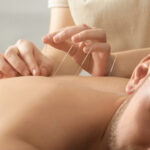
Acupuncture is usually administered by inserting thin stainless steel needles into several of the 365 acupuncture points on the body. After carefully assessing their patient, an acupuncturist may insert between five and 20 needles, which are generally left in position for 10 to 15 minutes.
A person receiving acupuncture may experience a range of sensations, including throbbing, tingling, numbness, aching, and heaviness. Sometimes, acupuncture sessions also involve the use of heat, magnets, or electrical stimulation.
Can Acupuncture Help Treat Obstructive Sleep Apnea?
Research on acupuncture for OSA is still limited, but several studies suggest it may offer modest benefits as a complementary therapy.
A 2020 meta-analysis found that acupuncture was linked to reductions in the apnea–hypopnea index (AHI), less daytime sleepiness, and improved oxygen levels, particularly in people with moderate to severe OSA. However, the overall quality of evidence was rated low due to small sample sizes and inconsistent study designs.
A randomized trial involving patients with both hypertension and mild to moderate OSA found no significant difference between real and sham acupuncture, suggesting that results may depend on patient characteristics and study methods. Other smaller studies have reported improvements in oxygen saturation and sleep quality when acupuncture was combined with standard medical therapy.
More recently, a 2025 network meta-analysis comparing over 40 trials found that electroacupuncture showed the greatest improvement in breathing-related sleep measures, while acupoint embedding improved oxygen levels.
Overall, acupuncture may help reduce OSA symptoms for some people, but it should be viewed as an adjunctive therapy rather than a replacement for proven treatments like CPAP, oral appliances, or surgery. Larger, high-quality trials are still needed to confirm its effectiveness.
Can You Use Acupuncture for Snoring?
Some people seek acupuncture to reduce snoring, especially when it’s mild or not linked to sleep apnea. Limited studies suggest acupuncture may help by relaxing airway muscles, reducing nasal congestion, and improving airflow during sleep.
A few small trials have found short-term improvements in snoring frequency and loudness, particularly with electroacupuncture or regular treatment sessions. However, research remains preliminary, and results vary widely.
Acupuncture may offer a noninvasive, low-risk option for people looking to manage simple snoring, but it shouldn’t replace medical evaluation, especially if snoring is accompanied by pauses in breathing or excessive daytime sleepiness, which can be symptoms of sleep apnea.
What Are the Acupuncture Points for Sleep Apnea?
An acupuncture point, also sometimes called an acupoint, refers to a precise location on the body where an acupuncture needle can be inserted to prevent or treat symptoms. These points are carefully chosen by an acupuncture practitioner based on their assessment of the individual seeking treatment.
There are six acupoints that are often used in the treatment of sleep apnea.
- Zhaohai (KI6): This point is located on the inside of the foot, beneath the ankle bone. Located along the kidney meridian, Zhaohia, which means “shining sea,” is associated with yang and the element of water.
- Sanyinjiao (SP6): Sanyinjiao is an intersecting point of the spleen, liver, and kidney meridians. It's associated with yin. This point should not be used during pregnancy.
- Sishencong (EX-HN1): Sishencong is a group of four acupuncture points located on the top of the head. Applying acupuncture at these points is believed to calm and clear the mind.
- Shenmen (HT7): Shenmen, which translates to “spirit gate,” is found on the crease of the wrist beneath the pinky finger. It's located along the heart meridian.
- Zusanli (ST36): The zusanli acupuncture point is located on the stomach meridian and is found below the knee along the outside of the leg.
- Lianquan (CV23): This point is located on the throat, just above the Adam’s apple. It's a part of the conception vessel meridian, and applying acupuncture at this point is believed to promote yin.
What Are the Side Effects of Acupuncture?
When performed by a licensed and experienced practitioner, acupuncture is generally considered safe and well-tolerated. The needles used are very thin, sterile, and single-use, minimizing the risk of infection.
Mild side effects can occur, including temporary soreness, bruising, light bleeding, or dizziness at the needle sites. Serious complications are extremely rare but can happen if acupuncture is performed improperly or with non-sterile equipment.
People who have bleeding disorders, take blood-thinning medication, or are pregnant should talk with their healthcare provider before starting acupuncture.
As with any complementary therapy, acupuncture should be used alongside—not in place of—proven medical treatments for sleep apnea or other health conditions.
Medical Disclaimer: This content is for informational purposes and does not constitute medical advice. Please consult a health care provider prior to starting a new treatment or making changes to your treatment plan.

Written by
Amber Garnett, Contributing WriterAmber is a freelance writer who resides in Seattle. Amber has worked as a clinical social worker in the medical field for over a decade. She loves long nature walks, traveling and reading poetry.

Reviewed by
Howard J. Hoffman, DDS, Medical ReviewerDr. Howard J. Hoffman is a dentist specializing in dental sleep medicine and the treatment of obstructive sleep apnea and temporomandibular joint (TMJ) disorders. With more than four decades of experience in dentistry and over 25 years focused on sleep apnea treatment, he works with physicians and sleep specialists to help patients manage sleep-disordered breathing using oral appliance therapy.