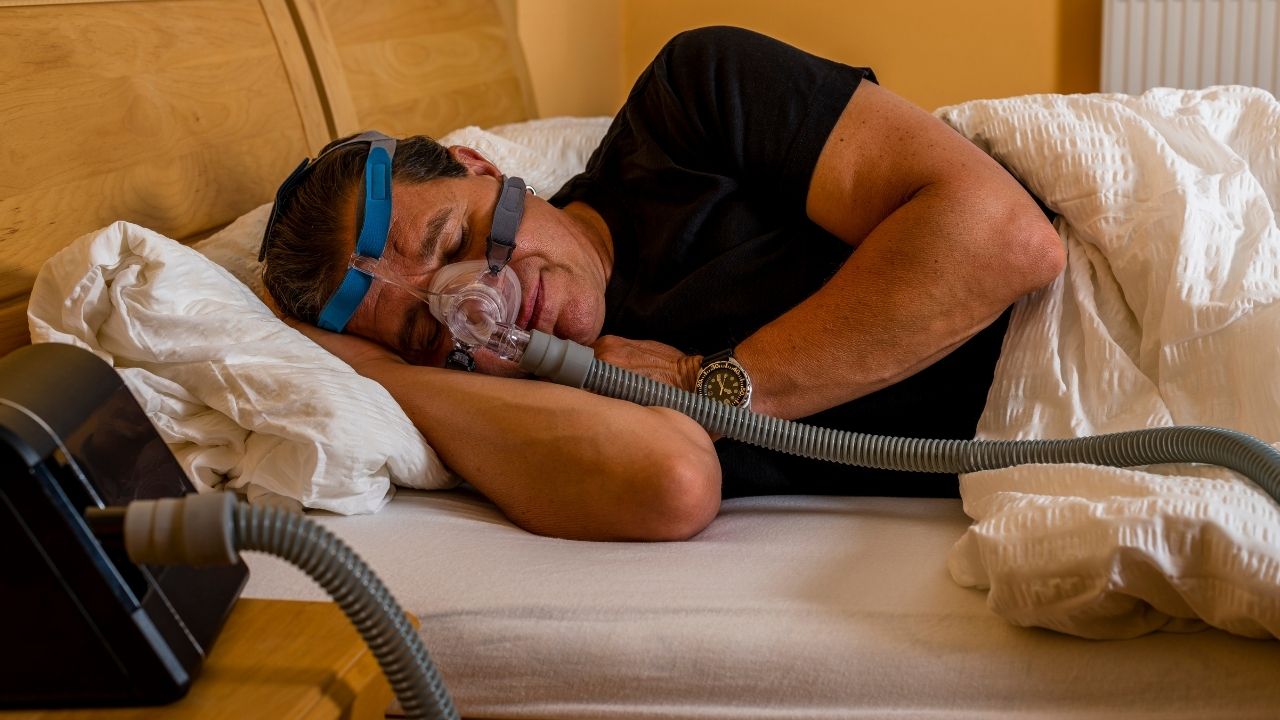
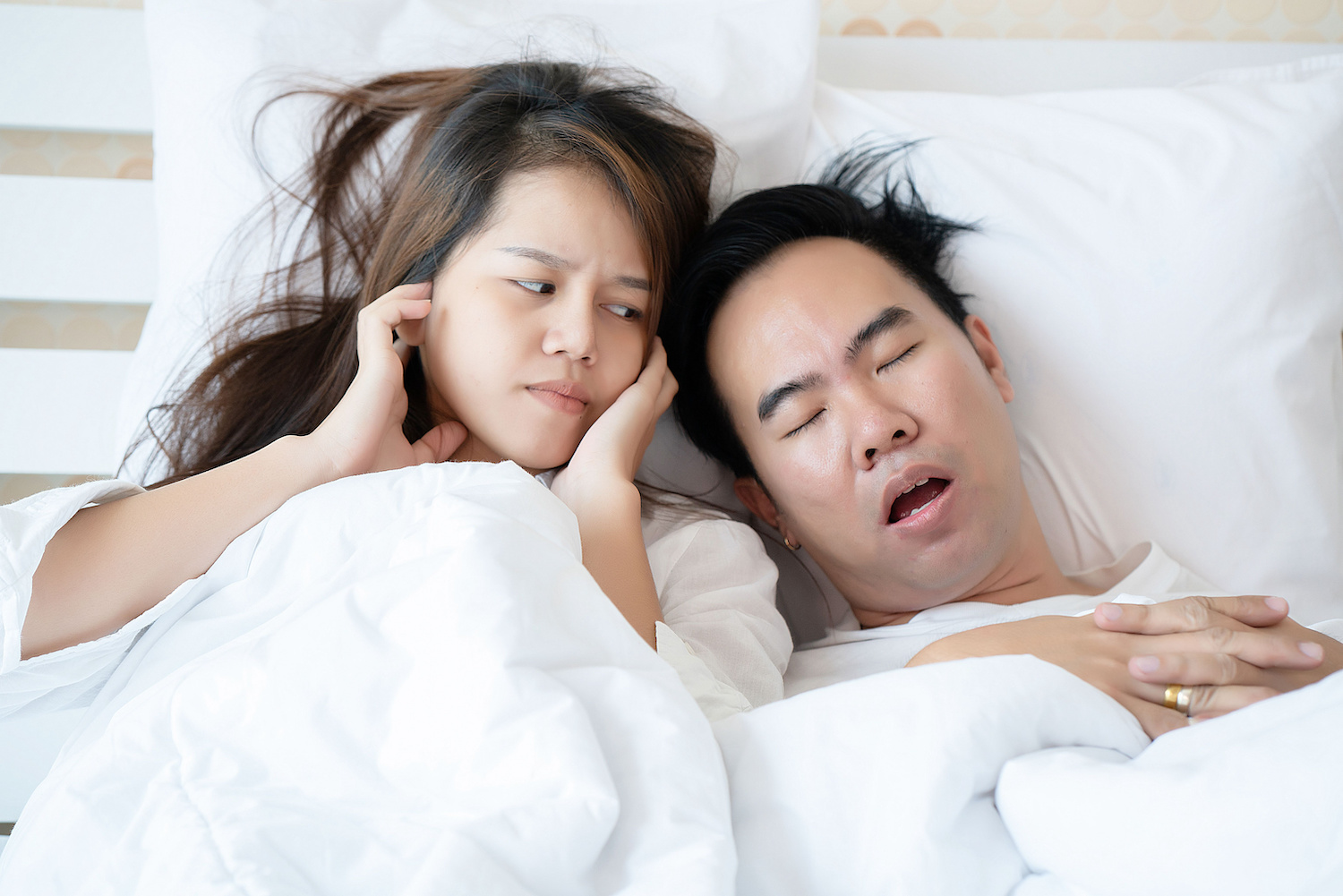
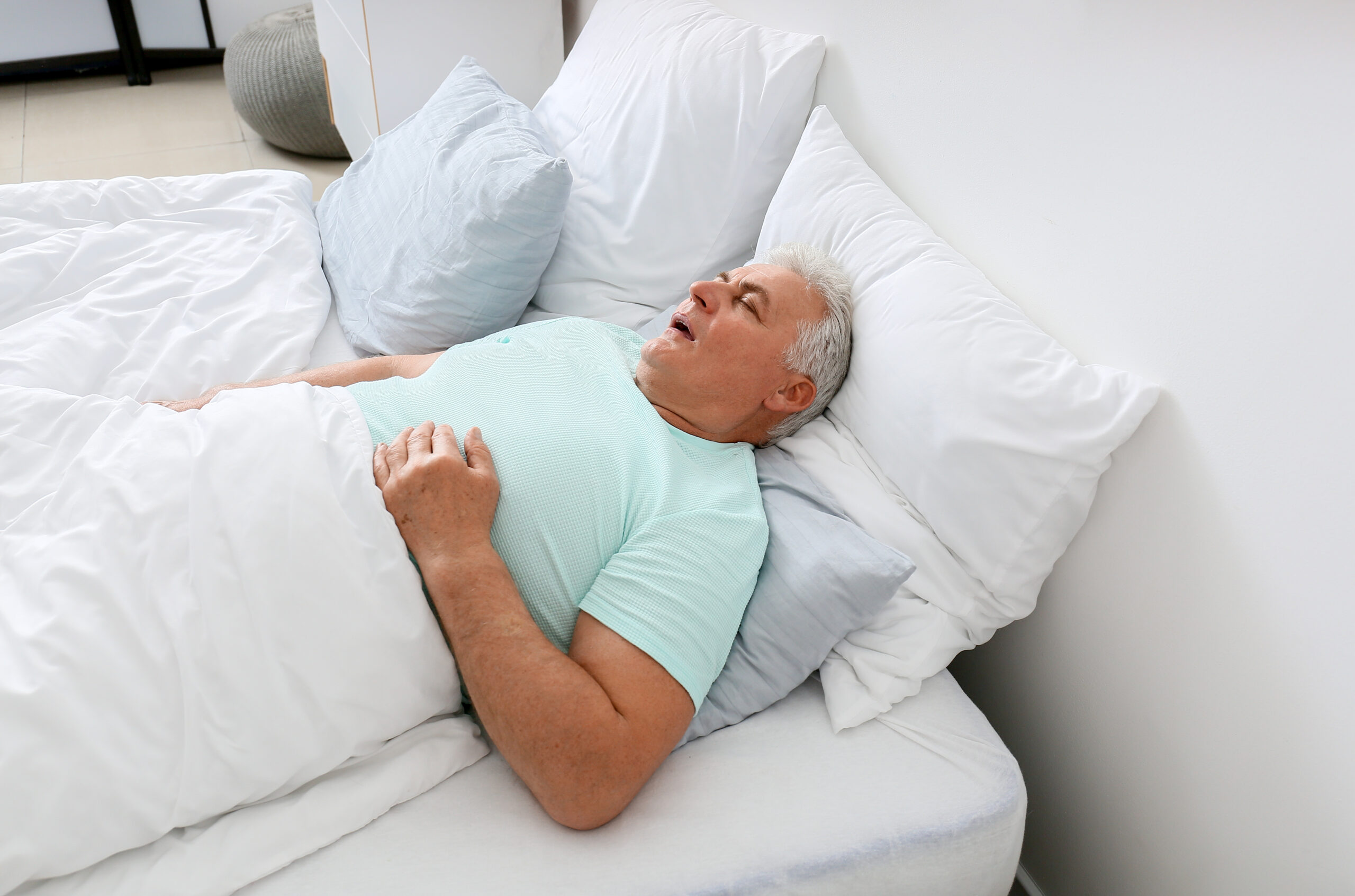
The STOP-Bang Questionnaire is a series of questions that was developed as a way for doctors to conduct an initial evaluation of your risk of having obstructive sleep apnea (OSA). However, the STOP-Bang Questionnaire cannot diagnose OSA; your doctor must order a sleep study. And since many experts have doubts about the accuracy of STOP-Bang scores, doctors tend to limit its use to specific situations.
Below, we'll cover how the STOP-Bang Questionnaire works, what different scores mean, and the survey’s strengths, weaknesses, and most common uses.
Think You May Have Sleep Apnea? Try an At-Home Test
our partner at sleepdoctor.com
10% off Home Sleep Tests
Buy Now“Truly grateful for this home sleep test. Fair pricing and improved my sleep!”
Dawn G. – Verified Tester

Simple and convenient
- Equipment delivered to your doorstep
- One overnight test in the comfort of your own bed

Uncover sleep apnea
- Quietly collects data while you sleep
- 98% effective in detecting sleep apnea

Affordable & ships fast
- Arrives in 2-4 business days
- In-lab sleep tests cost ~$3,000+ (this one’s $189), HSA/FSA eligible


What Is the STOP-Bang Questionnaire?
The STOP-Bang Questionnaire is a screening tool that doctors can use to quickly assess your risk of having obstructive sleep apnea. It involves a series of eight yes-or-no questions. These questions, reflected in the STOP-Bang acronym, relate to known risk factors for OSA.
For each question, the doctor records the answer as either yes or no. After completing the survey, the doctor adds the total number of “yes” answers together to calculate the STOP-Bang score. Higher scores mean a greater likelihood of moderate to severe OSA.
| Risk Factor | Question | Why It Matters |
|---|---|---|
| Snoring | Do you snore loudly enough to disrupt a bed partner or be heard through a door? | Loud and frequent snoring is a common symptom of OSA. |
| Tiredness | Are you often noticeably sleepy or fatigued during the day? | People with OSA often feel very tired or doze off during the day. |
| Observed Apneas | Has someone seen you gasp, choke, or stop breathing while sleeping? | OSA involves repeated temporary lapses in breathing called apneas. |
| Pressure | Do you have high blood pressure? | High blood pressure is frequently associated with OSA. |
| Body mass index (BMI) | Is your body mass index over 35? | People with obesity are more likely to have OSA. |
| Age | Are you older than 50? | OSA becomes more common with aging. |
| Neck circumference | Is the circumference of your neck more than 16 inches? | Having a larger neck is a risk factor for OSA. |
| Gender (sex) | Were you assigned male at birth? | People of male gender have a higher risk of OSA. |
What Does a STOP-Bang Score Tell You?
The STOP-Bang score tells you whether you have a low, intermediate, or high risk of having obstructive sleep apnea. This score is the total number of “yes” answers to the eight questions on the questionnaire.
| STOP-Bang Score | Risk of OSA |
|---|---|
| 0 to 2 | Low risk of obstructive sleep apnea |
| 3 to 4 | Intermediate risk of obstructive sleep apnea |
| 5 to 8 | High risk of obstructive sleep apnea |
It's important to note that the STOP-Bang score does not diagnose you with obstructive sleep apnea. Instead, the STOP-Bang Questionnaire may help your doctor determine if you need a sleep study to check for OSA. A sleep study can directly measure how often you have reductions in breathing during sleep, which is necessary for an OSA diagnosis.
Is the STOP-Bang Questionnaire Accurate?
The STOP-Bang Questionnaire may be useful in certain contexts, but many sleep experts don't consider it accurate enough for widespread use.
The STOP-Bang score is most dependable for people with low scores of 1 or 2, who are unlikely to have OSA. It’s less dependable for people with intermediate or high scores, many of whom do not have OSA. In fact, studies have found that roughly 60% of people that the questionnaire would expect to have OSA don’t actually have the condition.
There may also be variability in the accuracy of the STOP-Bang Questionnaire across different groups of people. For example, while BMI cutoff (35) used in the questionnaire has been evaluated in people who are white, it may need to be adjusted in people of different ethnicities.
Modifications of the STOP-Bang Questionnaire
Some researchers have proposed modifications to the original STOP-Bang Questionnaire in order to address some of the concerns about its accuracy.
The Enhanced STOP-Bang Questionnaire involves adding a second step to the interpretation of scores of 3 or 4. In this modification, if a person answers yes to at least two of the STOP questions and at least one of the questions about BMI, neck circumference, or male gender, then they're considered to have a high risk of obstructive sleep apnea.
Another potential modification of the STOP-Bang Questionnaire is to use a different BMI cutoff based on a person’s background and nationality.
Doctors may also incorporate information from other tests when interpreting the STOP-Bang score. For example, the results of a common test of carbon dioxide in the blood may help predict a person’s risk of having OSA when evaluated alongside their STOP-Bang score.
What Are the Benefits of the STOP-Bang Questionnaire?
The primary benefit of the STOP-Bang Questionnaire is that it’s convenient to conduct. In most cases, it takes just a couple of minutes to go through the questions and calculate the result. For busy doctors, this makes the STOP-Bang Questionnaire a time-efficient way to assess a person’s risk of sleep apnea.
The questions are straightforward, which means that the test is accessible to doctors who aren't sleep medicine specialists. Simple questions also make it easier for individuals to understand and respond to the survey.
In addition, while there are limitations to the overall accuracy of the STOP-Bang Questionnaire, doctors can generally be confident that people with very low scores do not have OSA. The questionnaire may also be helpful in specific medical situations, such as before a person has surgery.
Are There Downsides to Using the STOP-Bang Questionnaire?
There are several potential downsides to doctors using the STOP-Bang Questionnaire.
- Risk of false positives: A high percentage of people without OSA may receive intermediate or high STOP-Bang scores. These people may receive unnecessary testing and experience undue worry about their health.
- Risk of false negatives: Although it happens infrequently, the STOP-Bang Questionnaire may return a low score for someone who actually has OSA. This can cause the condition to remain undiagnosed and untreated.
- Not broadly validated: Not enough research is available to know how well the STOP-Bang Questionnaire works in the general population or across specific groups of people.
- Can’t replace sleep studies: Using STOP-Bang may offer background information about a person’s risk of having OSA, but it doesn't replace the need for more specialized sleep studies.
How Is the STOP-Bang Questionnaire Used?
Because of its limitations, the STOP-Bang Questionnaire isn't a part of routine health care. Organizations of medical experts have reviewed the existing studies and determined that the STOP-Bang Questionnaire should not be broadly used in people who don't have symptoms of OSA.
However, there are some specific situations in which the STOP-Bang Questionnaire may be useful to doctors, especially those who aren't sleep specialists.
Preparing for Surgery
Doctors often use the STOP-Bang Questionnaire in the process of preparing a person for a surgical operation. People with OSA are more likely to experience complications when they have surgery. While a significant number of people who go in for surgery have OSA, many of them have not yet been diagnosed with the condition.
Because of its convenience, doctors can use the STOP-Bang Questionnaire to promptly identify individuals who may be at a higher risk of having OSA and related surgical complications. Many medical experts recommend that people preparing for surgery answer the eight questions needed to calculate their STOP-Bang scores.
Admitting Patients to the Hospital
For people who are admitted to the hospital as inpatients, a doctor or nurse may be able to use the STOP-Bang Questionnaire to quickly assess whether they might have OSA. OSA may affect a person’s symptoms and overall recovery from the condition that put them in the hospital.
Are There Other Questionnaires Similar to the STOP-Bang Questionnaire?
Besides the STOP-Bang Questionnaire, several other screening tools can help doctors identify people who may have undiagnosed obstructive sleep apnea. These include:
- Berlin Questionnaire
- Sleep Apnea Clinical Score
- Lausanne NoSAS (Neck circumference, Obesity, Snoring, Age, Sex) Score
- Multivariable Apnea Prediction (MVAP) Instrument
Of these different screening tools, the STOP-Bang Questionnaire has been most well-validated in research studies. Nevertheless, none of these questionnaires or scores, including STOP-Bang, can diagnose obstructive sleep apnea.

Still have questions?
Sleep apnea products can be confusing. If you need individualized assistance, post your question to the Sleep Doctor forum.

Written by
Tochukwu Ikpeze, MD, Contributing WriterTochukwu grew up in New York and has a passion for creative and scientific writing. Tochukwu holds an undergraduate degree in Biology and Psychology, a Master’s degree in Biomedical Science, and a Medical Degree as well. In his free time, Tochukwu enjoys reading, learning, exploring various topics pertaining to the human condition and conveying that information to the public through writing.

Reviewed by
Howard Hoffman, DDS, Medical ReviewerDr. Howard J Hoffman was born and grew up in New York. After attending the Ohio State University -B.S. 1970, he attended The University of Maryland School of Dentistry, earning his DDS degree in 1974. Dr. Hoffman served 2 years in the U.S. Public Health Service in Guam from 1974-1976. Upon returning to the continental U.S., he opened a private dental practice and began his studies in Implant Dentistry in the mid-90s, including two 18-month programs, first with the American Academy of Implant Dentistry, followed by a second at Harvard University.